
SPACE March 2026 (No. 700)
The History of a Site
Every site has a history. In most cases, that history is either erased or forgotten when ownership changes. However, all the projects we designed and realised between 2023 and 2025 were buildings for entities that had operated on their respective sites for a long time. More than half of them were the winning projects from design competitions, suggesting that our strengths lie in projects where we genuinely engage with the specific context.
I (here, ‘I’ refer to both Kim Jinhyu and Nam Hojin) don’t believe that everything is beautiful, nor that everyone must agree on what is beautiful. I do find, however, that often there are things that at one time I find unappealing which gradually come to feel beautiful the longer I look and think about them. These cases are more compelling.
Not everything old deserves respect; knowing what to discard is also a virtue. I enjoy change. It takes courage to respect something that wasn’t necessarily meant to be respected long term, or to refuse to respect what everyone says should be respected. Yet, once you gain empathy for such a stance, the project gains a powerful momentum.
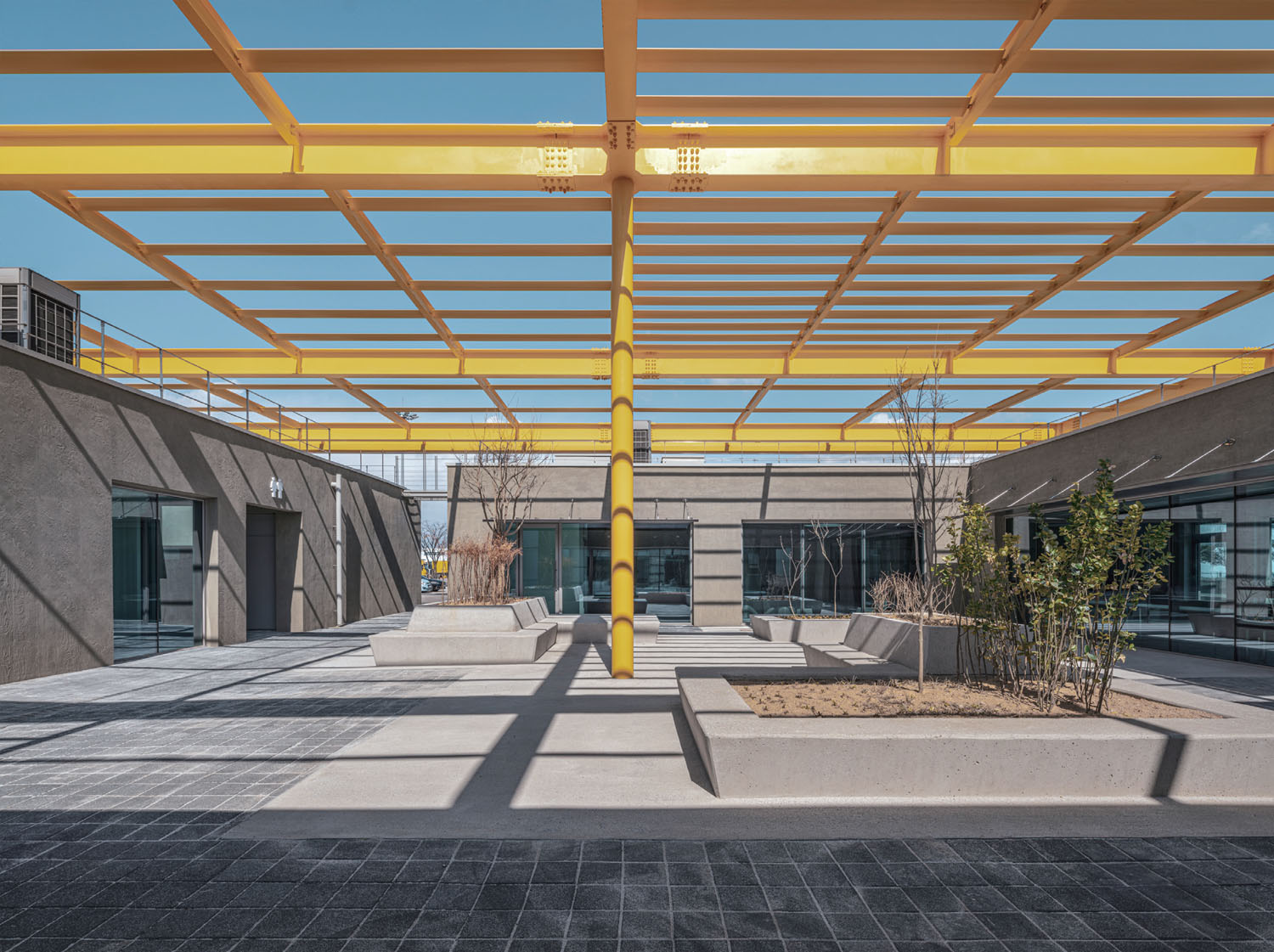
At the start of 2023, our first project was a proposal from a design competition for two workers’ facilities (cargo lounges) within the Incheon International Airport cargo terminal. We had to place a 500m2 building at the centre of a parking lot spanning several thousand square metres. The cargo warehouses dominating the site were not built for visual pleasure, nor did they express any sense of local identity. They could have stood anywhere in the world. We thought this absence of context would free us up to design forms as we wished. However, we were wrong; every scheme we drew felt arbitrary and hollow.
Although, after a while, it began to take on a certain beauty. The vast artificial zone created by reclamation, the perfectly cut plots lined with massive warehouses, the endless flow of boxes traveling on conveyors beneath long-span structures, the white light filtering through skylights and space frames: there was something quietly moving about this area and its architecture. The monumental scale found in something that was never meant to be a monument was quite moving.
The beauty discovered in the logistics warehouses became the DNA determining our proposed convenience facility: squareness, slenderness, sparseness, the height, largeness, technology-oriented, and efficiency. While a few characteristics alone do not complete a work of architecture, I believed this building could emerge safely as a continuation of the cargo terminal’s history. This proposal resonated with the judges, and the winning design was ultimately realised.
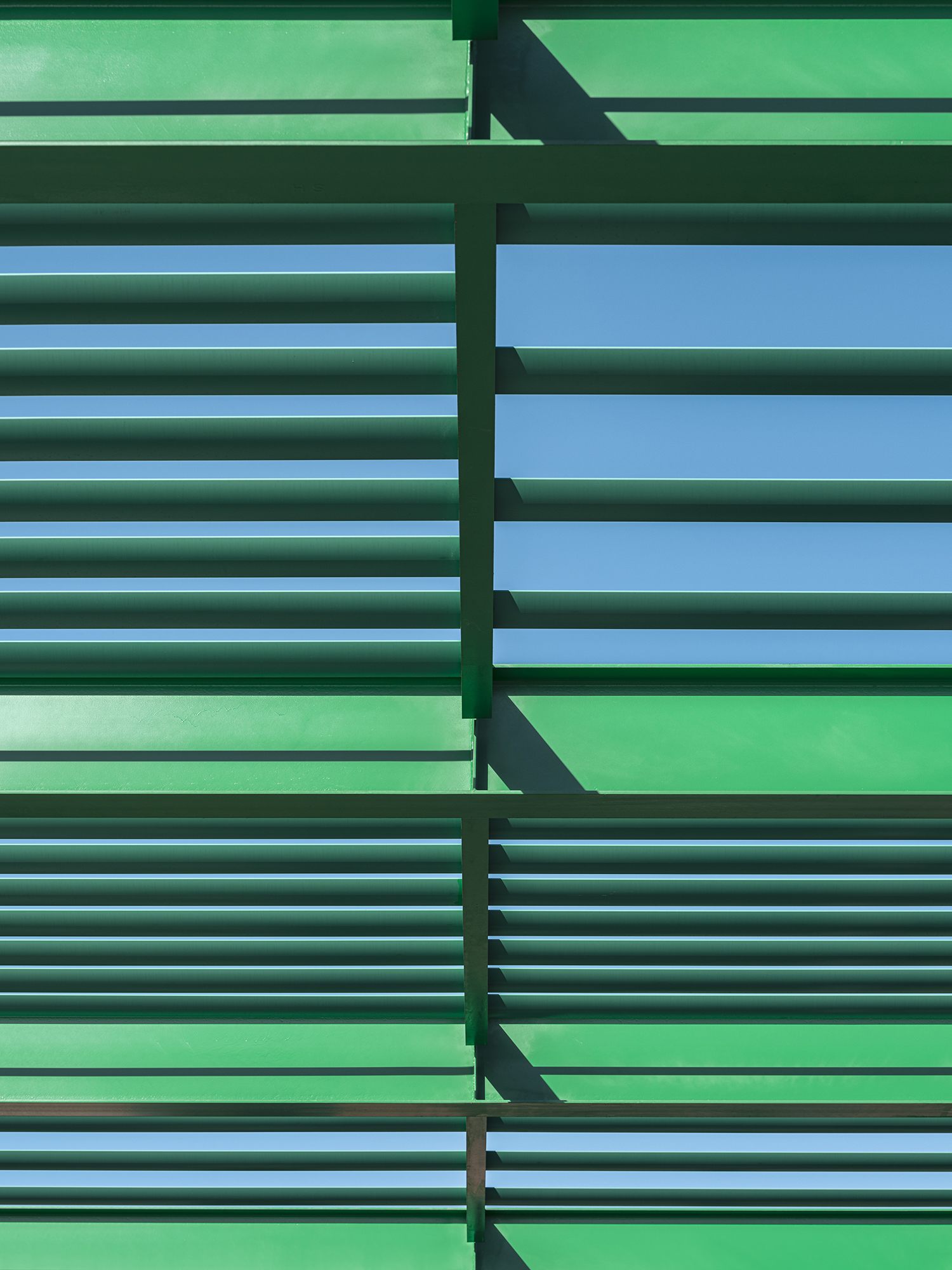
This experience was a starting point, where we began to take an interest in things that already exist. Subjects we hadn’t even thought to read became our most significant clues, and the narratives informing our architecture became more compelling.
Reading into the history or the context of a site does not necessarily lead to harmony or imitation. Deliberate dissonance, indifference, even distance are all valid choices for an architect. The difference between dissonance made with understanding and the one made without is that the former allows the meaning of architecture to expand beyond itself. Here, ‘beyond’ refers to the exterior of the ground the building is situated, the temporal frame before and after the limited period in which the building is designed and constructed, and everything outside the intrinsic value that allows a work to be isolated and critiqued as an autonomous object.
Form and Formlessness
At architecture school, I was taught Formalism. I was told that if meaning is embedded in form, it can be understood even by people who speak different languages.One of the cargo lounges at the Incheon International Airport was designed in a courtyard-form, while the other took the form of a pinwheel. Placing two architecturally opposing forms on sites with almost identical conditions was a deliberate gesture. We wanted to suggest that under a steel canopy, form does not really matter.
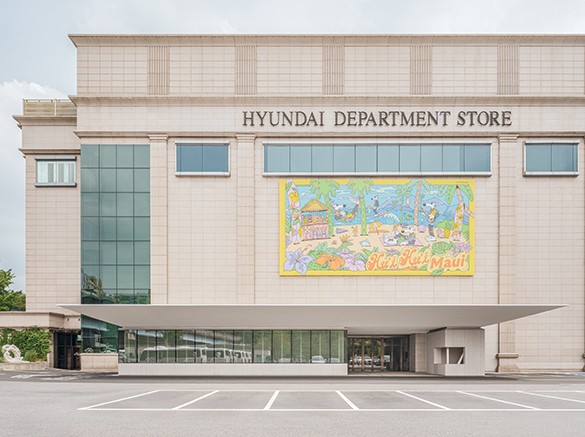
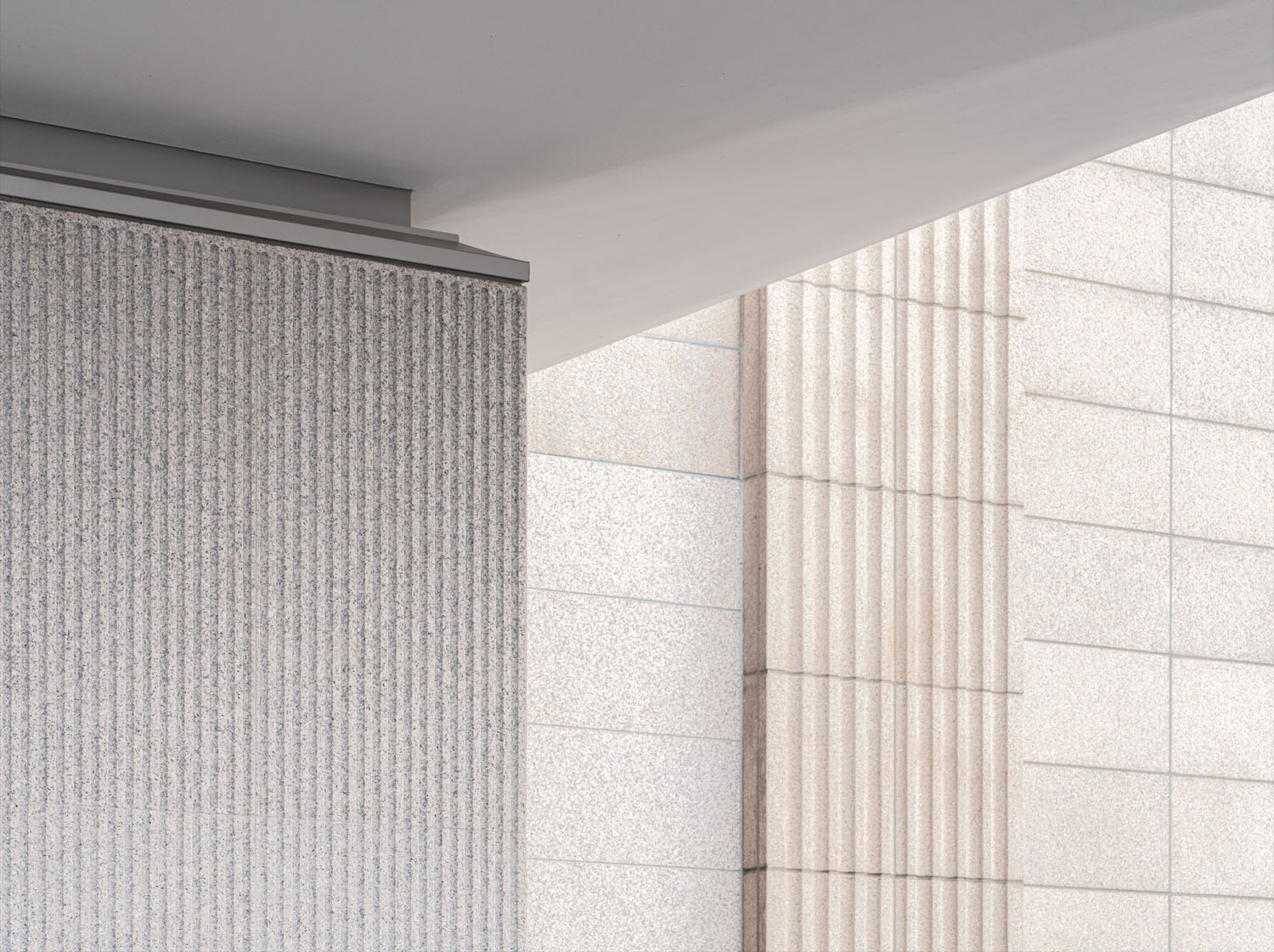
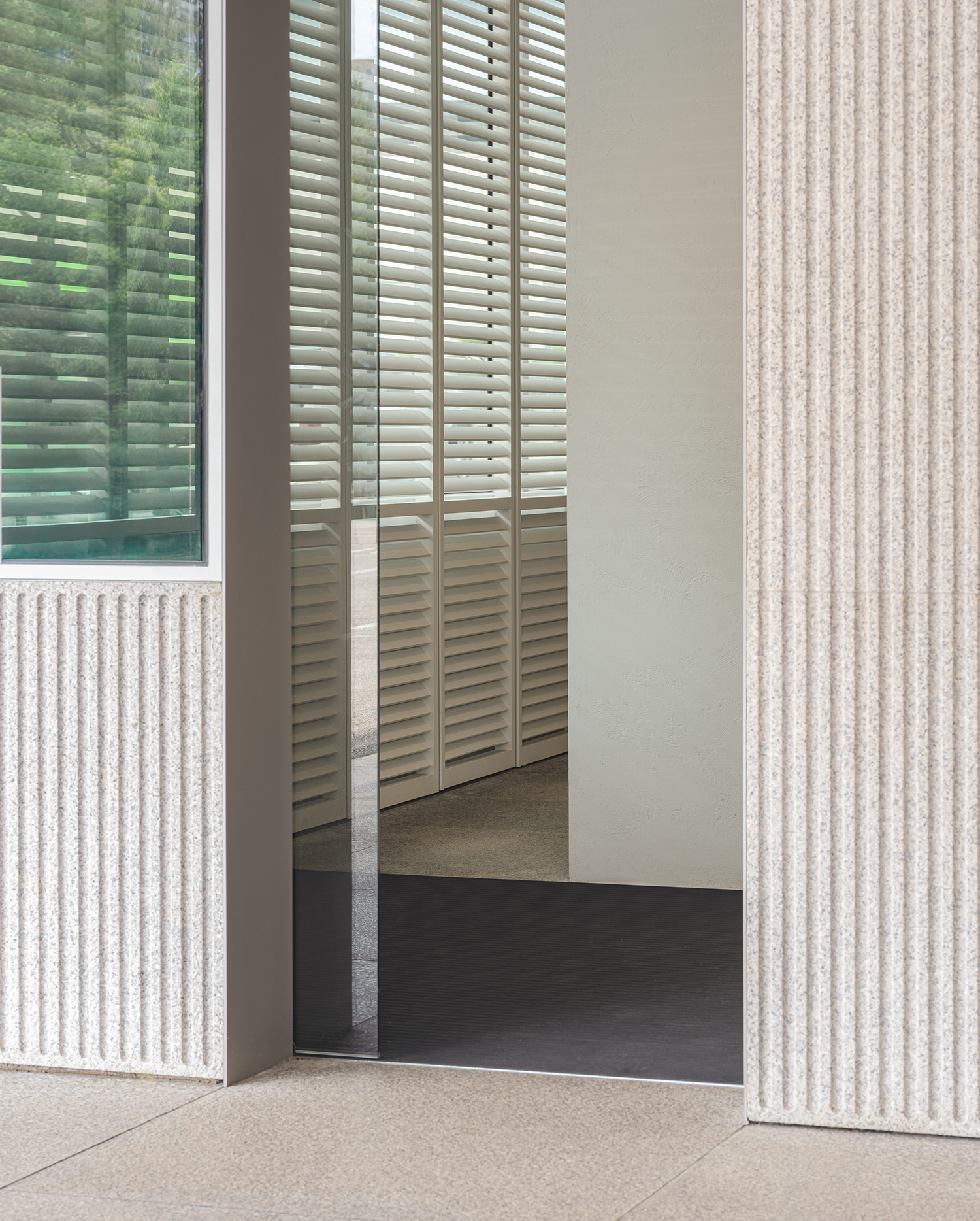
In the Hyundai Department Store Valet Lounge, the abstract plane is the protagonist. It is a white, continuous plane that resists temporal or regional associations. I did not want to overwhelm the architecture of the main department store building nor be overwhelmed by it.
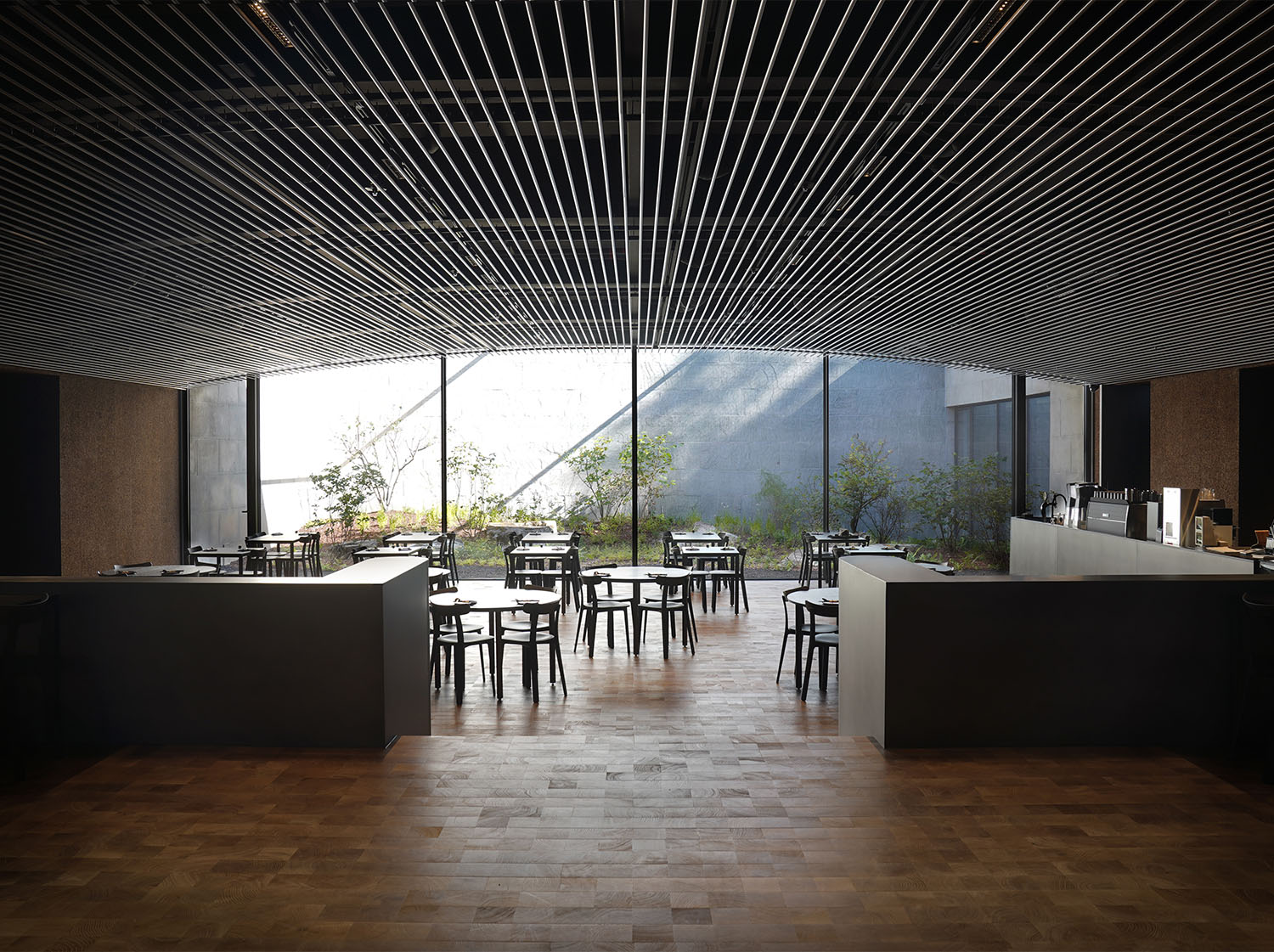
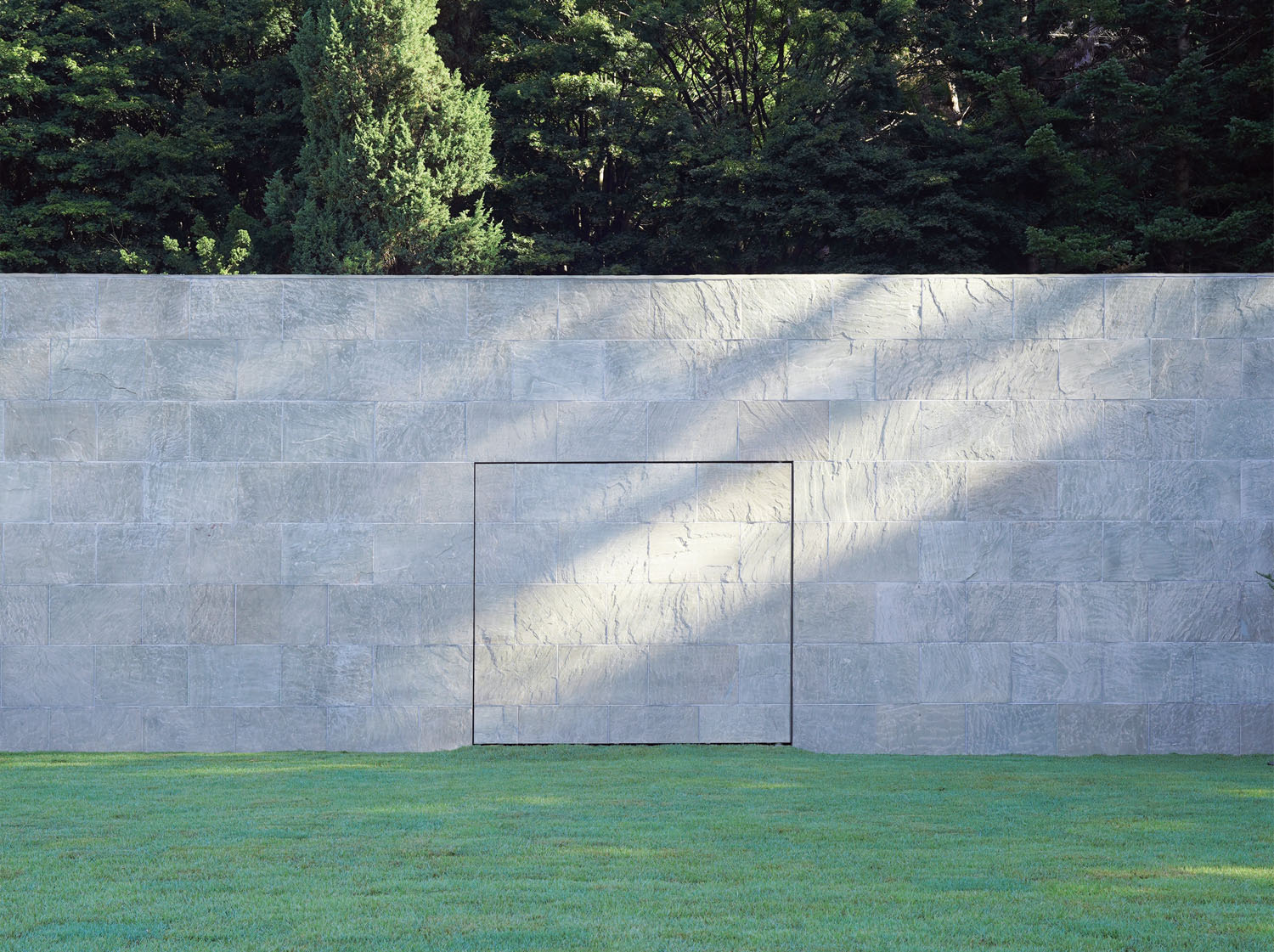
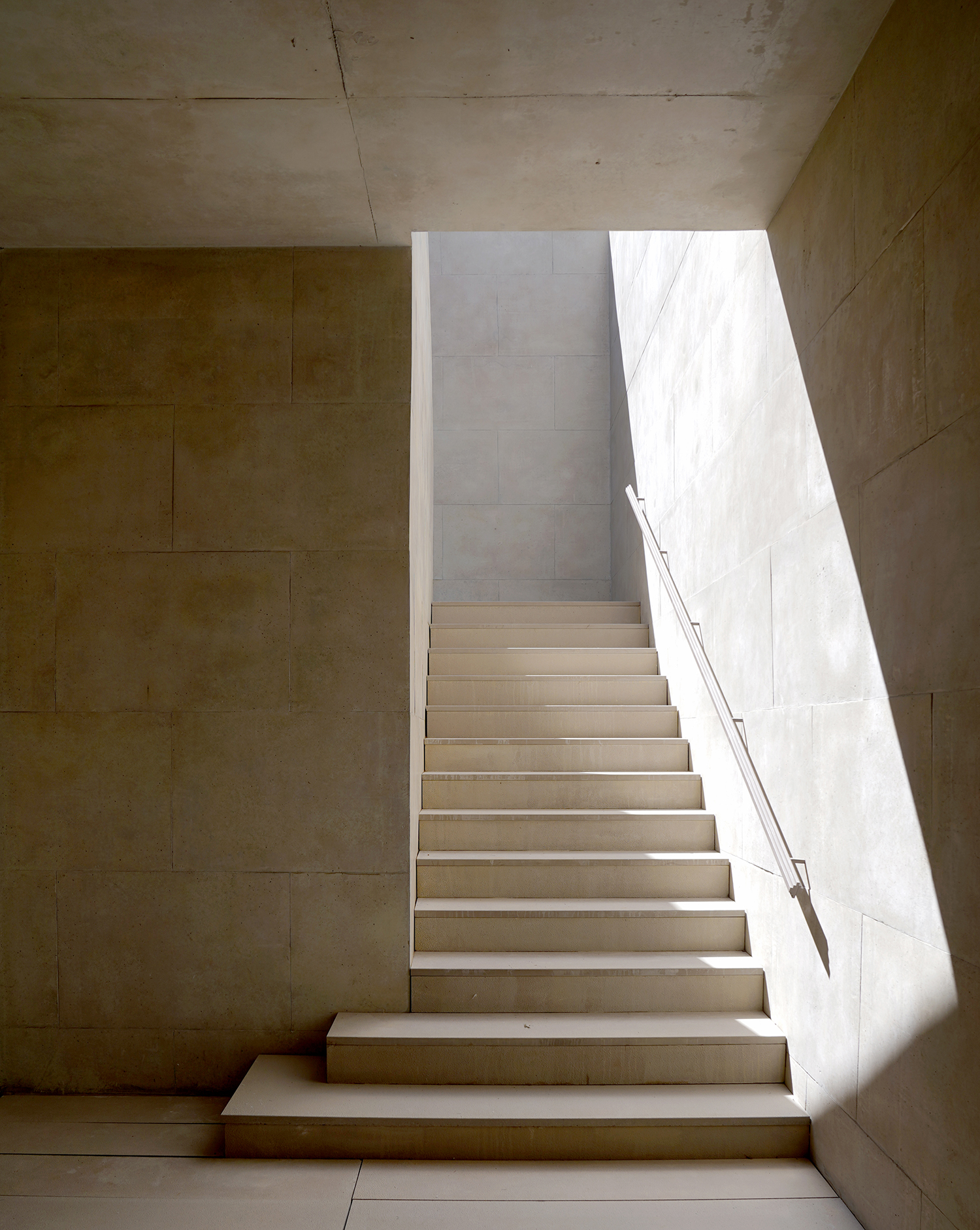
At Hoam Cafe, the new structure attaches itself to a retaining wall and extends underground. From outside, the new structure is hardly visible. It may be the most formless work of architecture I have made, and perhaps it would be difficult to make a building more formless than this, at least for a while.
All three projects speak not through form, but through formlessness. I did not consciously conceive them as a series. At that point, I had only recently begun to seriously consider the history of the site, and it felt difficult to establish relationships with that already existed while employing strong, assertive forms. I believed that subtraction could bring about a strong sense of presence.
Formlessness enables architecture to adopt an open ending. When a building is completed with a single decisive form, imagination stops there. The outline of the Hoam Cafe cannot be grasped without looking at its floor plan. It is asymmetrical and none of its corners align. Even if additional spaces were to be appended to the existing structure, none of its strengths would be compromised—something that has, in fact, already happened. We were drawn to this looseness, a state capable of accommodating possibility.
As the boxes of the Incheon International Airport Cargo Lounge come to signify ‘one among many things that they could be’, other possibilities emerge. This invites further imaginative possibilities. One can imagine what kind of space might have been created if the forms under the canopy had been triangular or circular, instead of being rectangular. Even after completion, the project continues to live within our drawings.
Structure and Expression
I do not believe that there is such a thing as a better structure. I do not think a wooden structure is superior to reinforced concrete, nor that a steel structure is superior to a heavy wooden structure. Wooden structures are now celebrated for their small carbon footprint, but its susceptibility to fire and moisture remains as a limitation. Every structural system, in similar ways, carries its own critical advantages and disadvantages.
Afterword
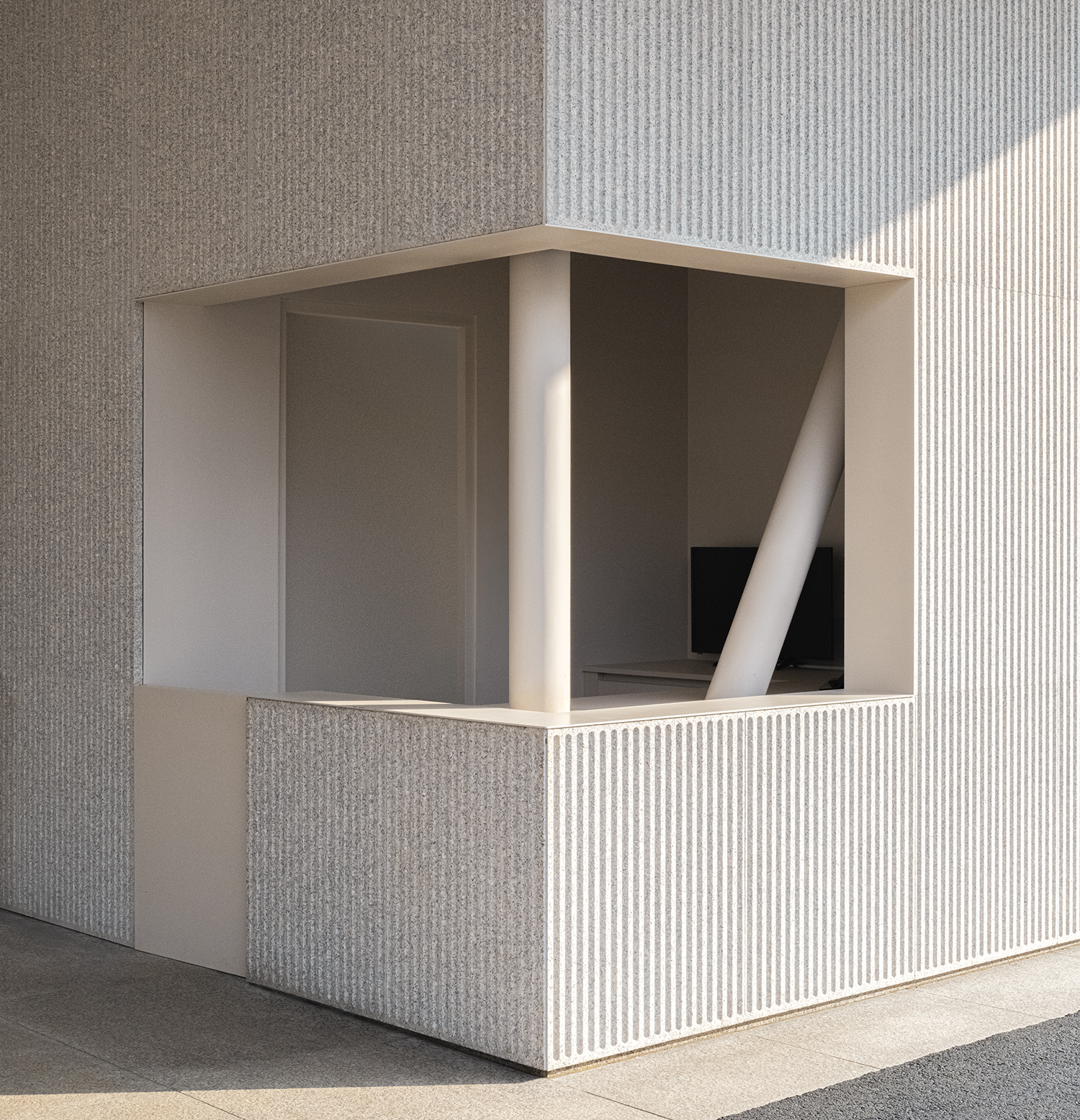
Our work is built upon the foundations laid by others. This is not to speak only of projects carried out on sites that have been cultivated over a long period of time. Our architecture is not merely a self-contained work executed on a specific site for a specific client; it also occupies a place within the broader flow of architectural culture and technology. We dream of architecture that grows through the thoughts of others, that does not freeze upon completion, and that does not lean on the weight of its own essence.