
SPACE November 2025 (No. 696)
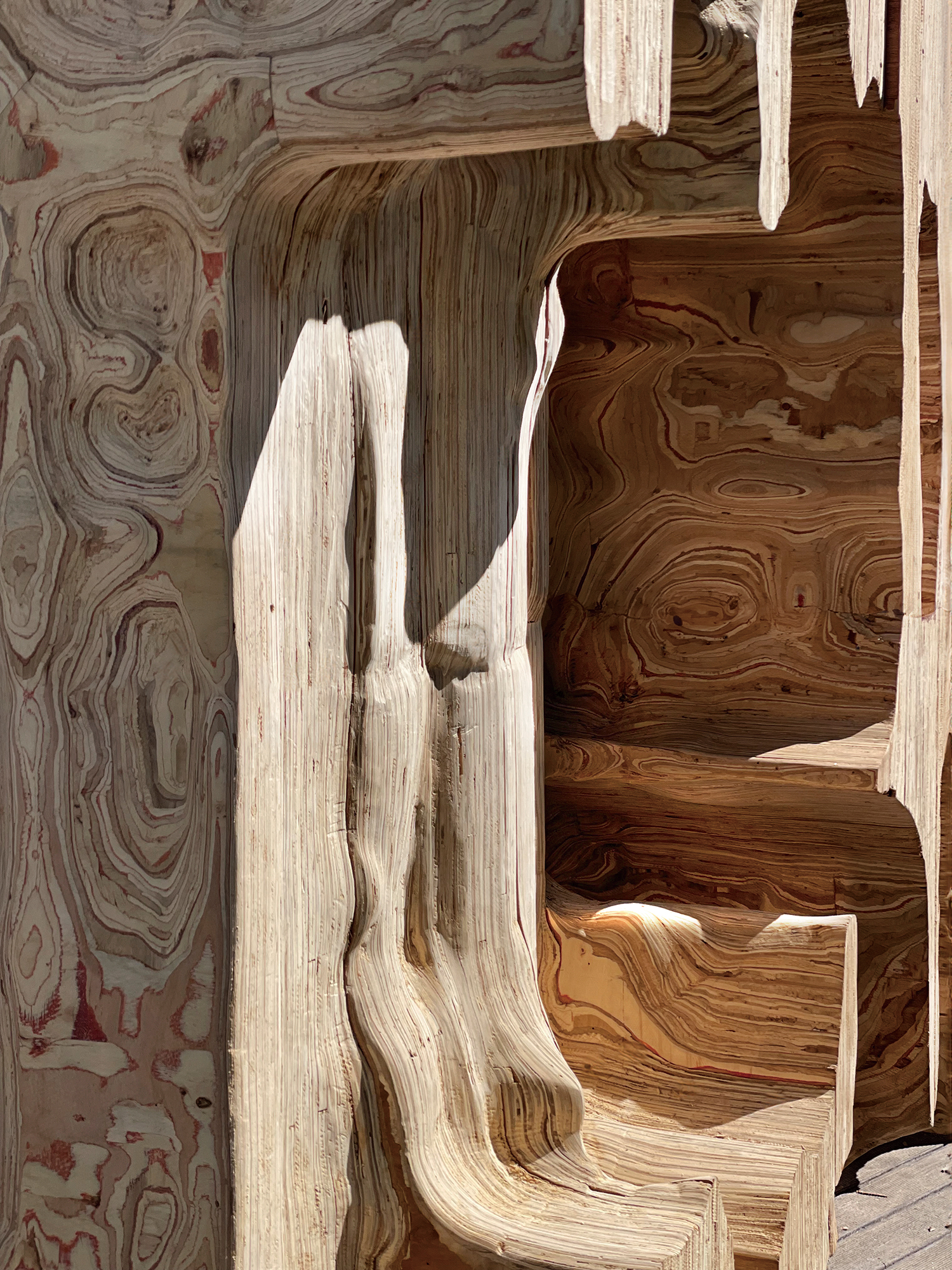
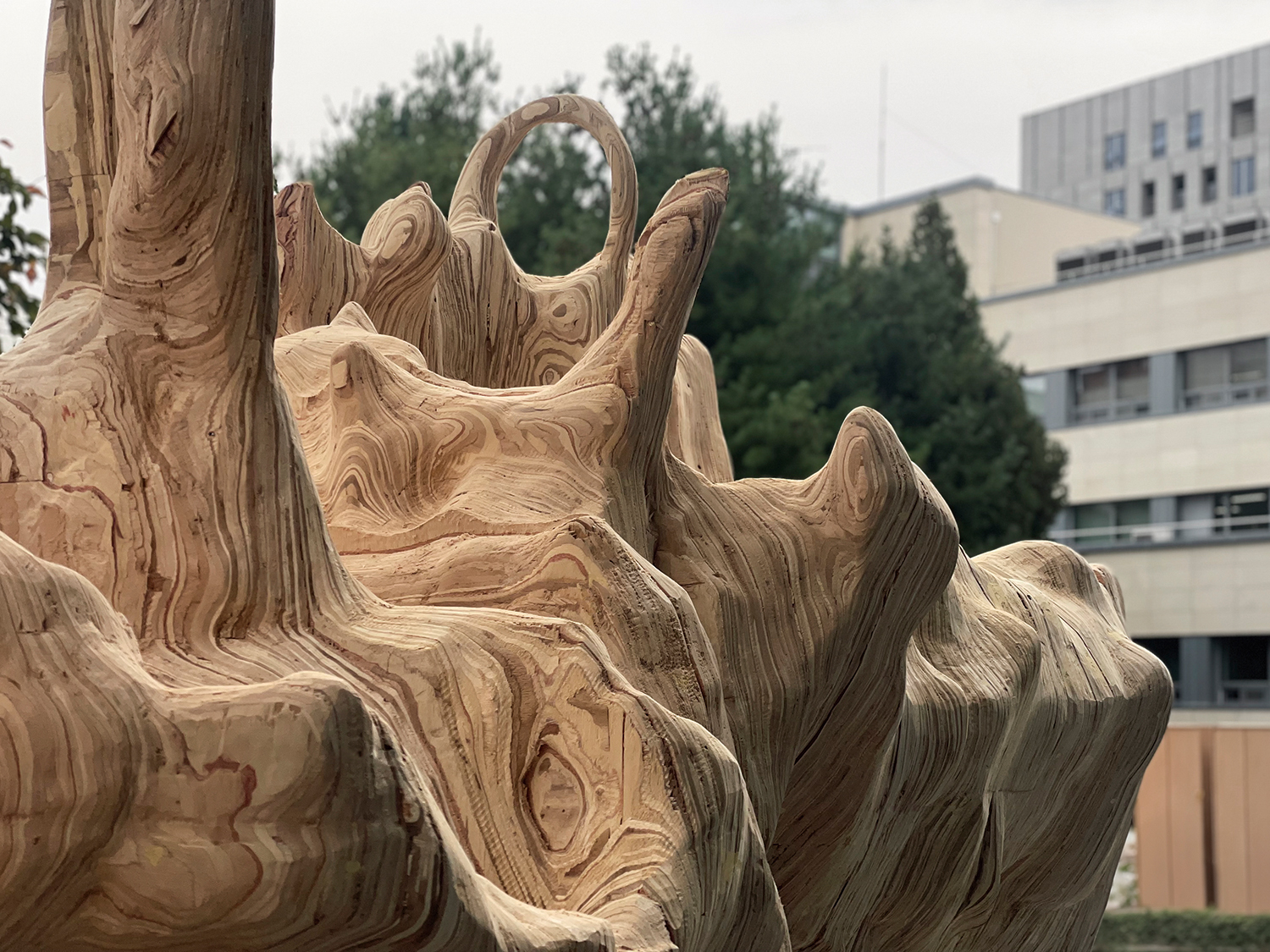
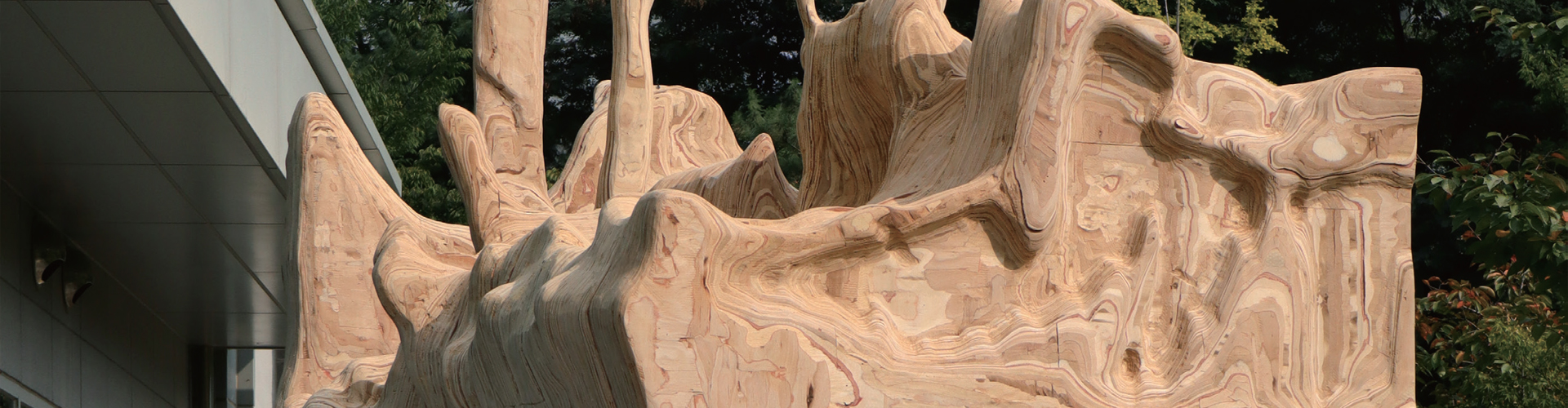
Topology: Hanok (2025) is an experiment that develops a topological design workflow using AI to reinterpret the sectional logic and spatial continuity of traditional Korean architecture beyond mere formal reconstruction or structural reproduction. Rather than directly restoring the structural joints or framing system of traditional hanok, the project focuses on its nonlinear spatial organisation, the fluidity of curves, and the continuous transitions between interior and exterior. These characteristics are gradually transformed through an AI-based three-dimensional mapping algorithm that interprets sequences of images as evolving forms.
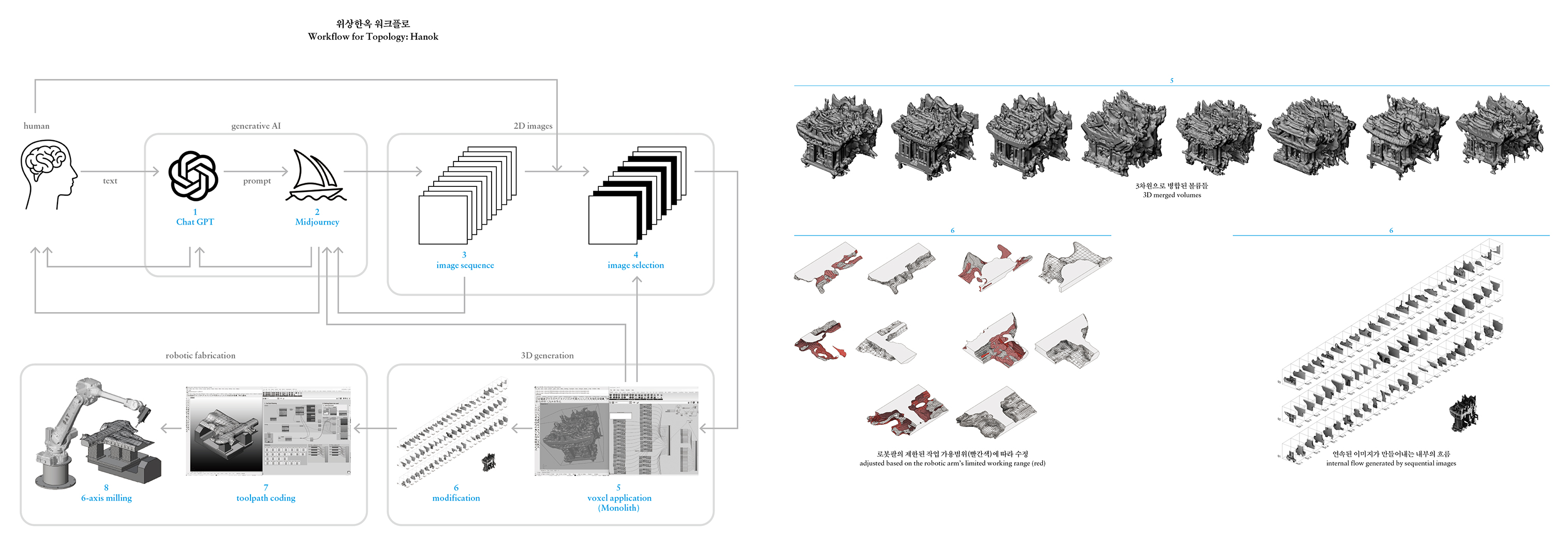
AI continuously generates sectional images of traditional architecture. This sequence is not the simple juxtaposition of images, but a reflection of the potential for topological transformation between adjacent sections, gradually evolving into a volumetric form. This method constitutes a ‘sequence-to-mass’ model, akin to the way a brain CT scan builds form by layering cross-sections. The AI-generated images of traditional architecture, combined with the flow of curves, are synthesised into an organic geometry.
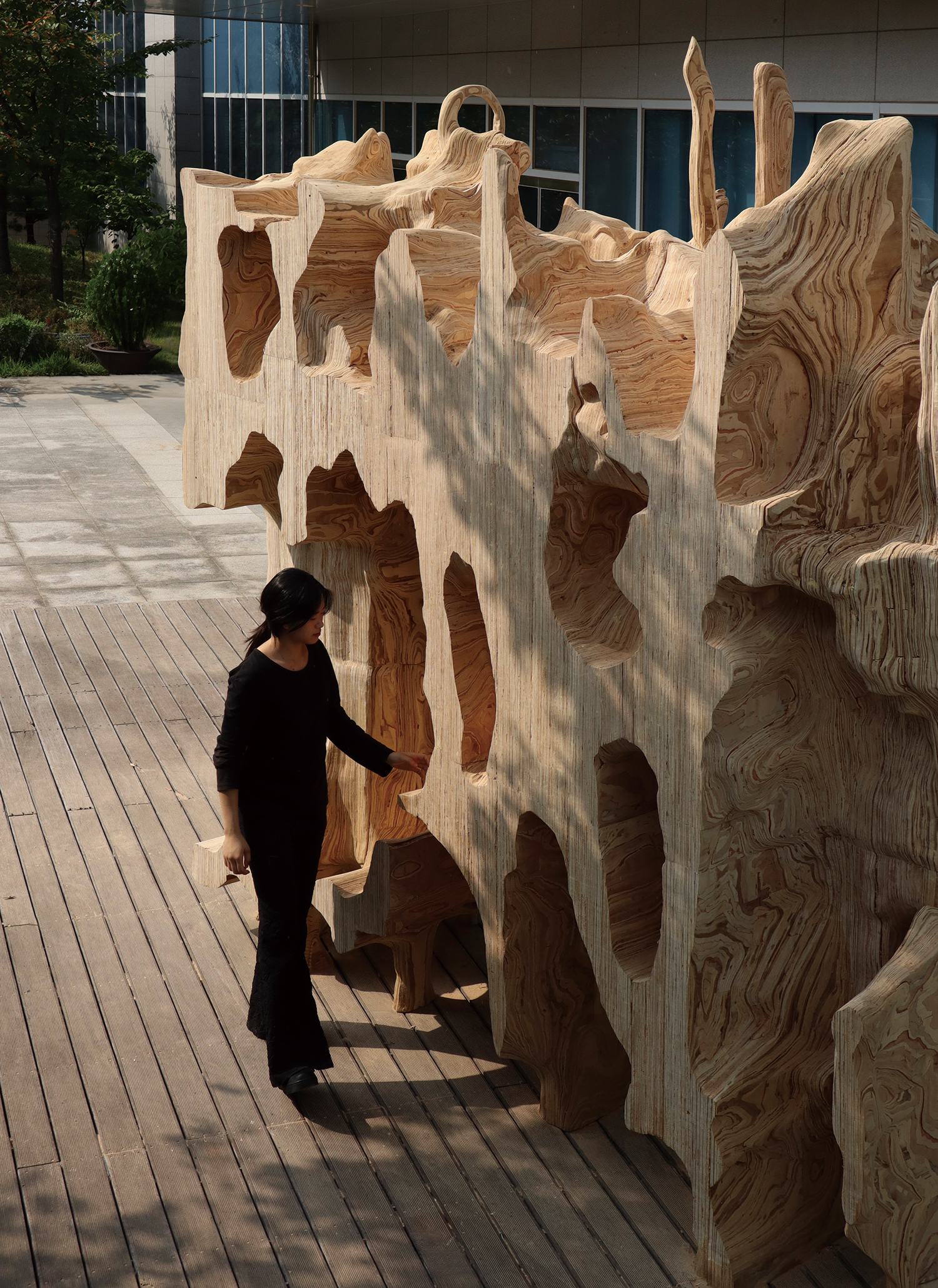
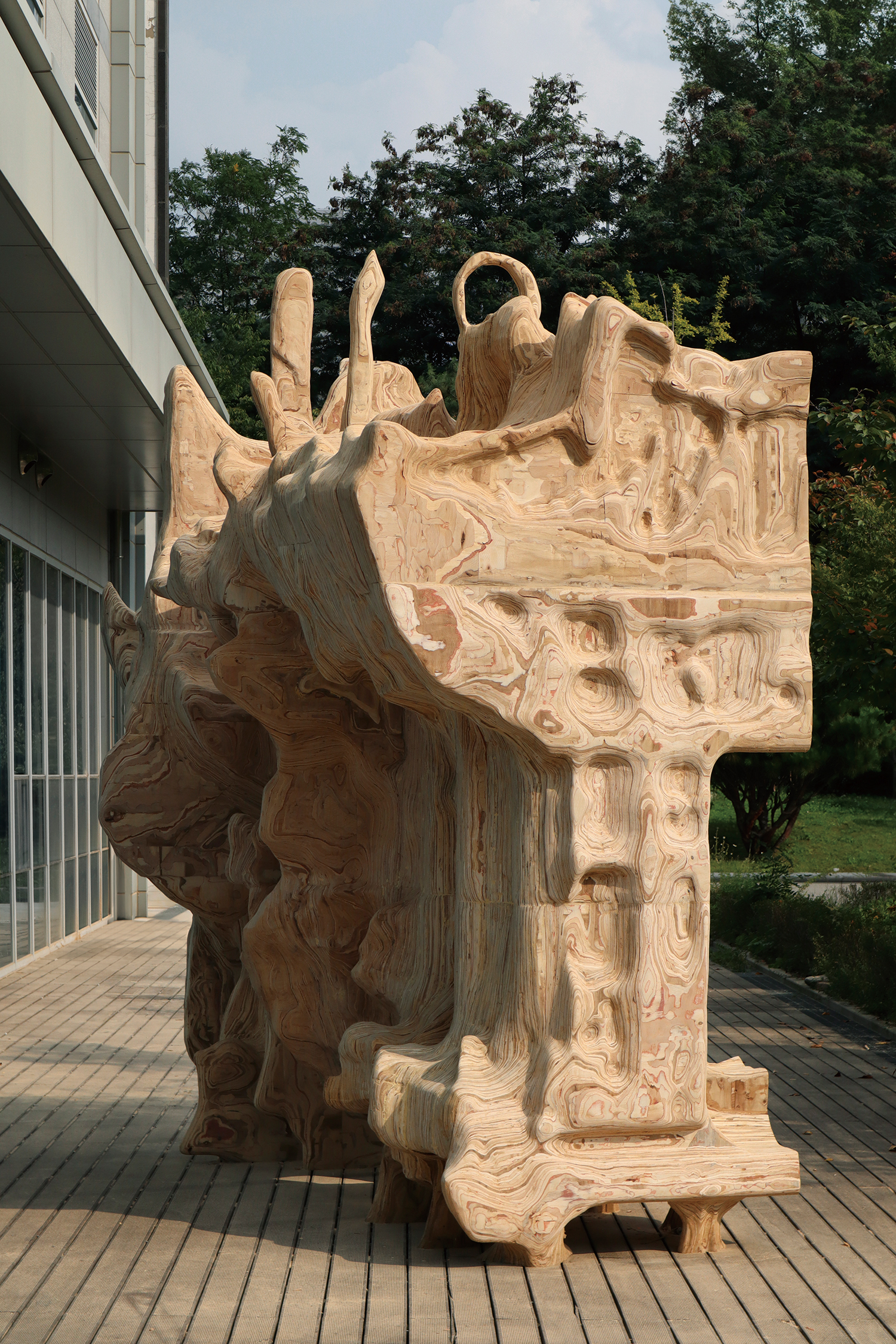
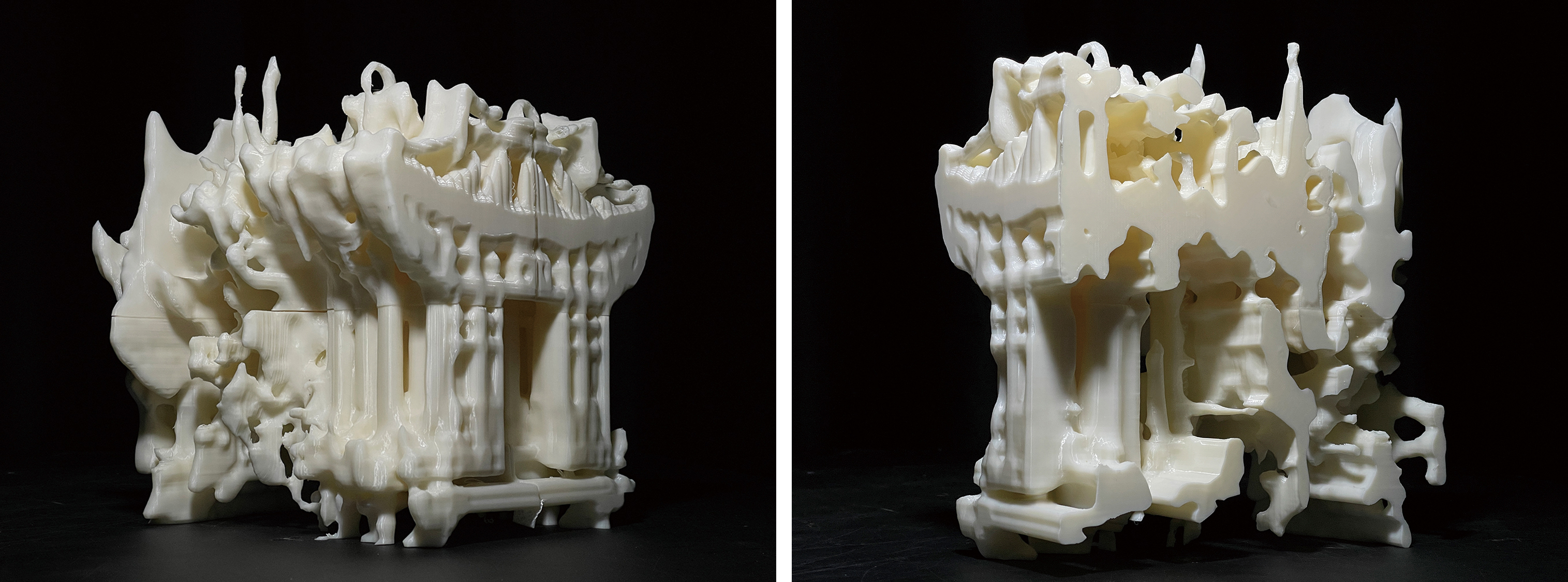
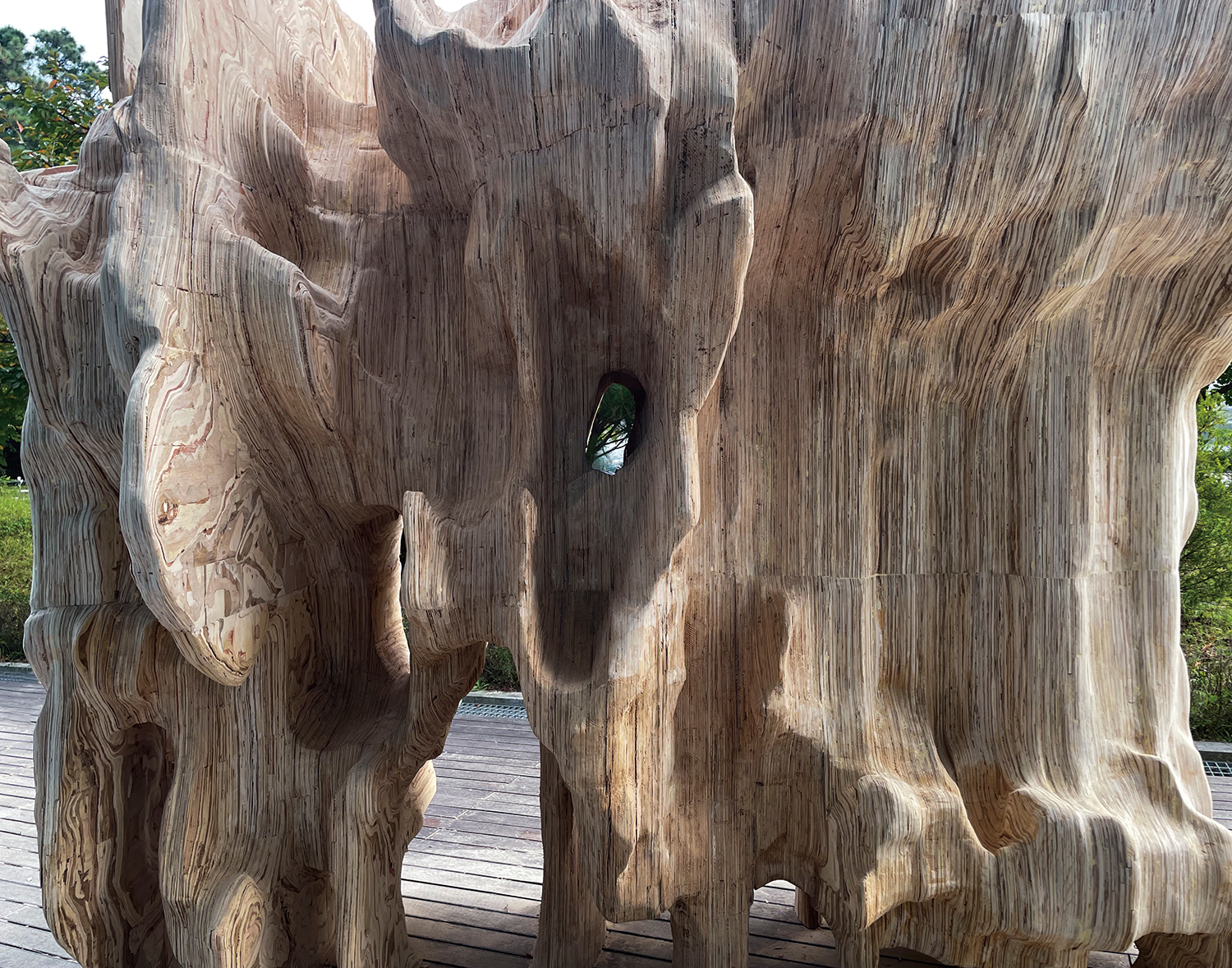
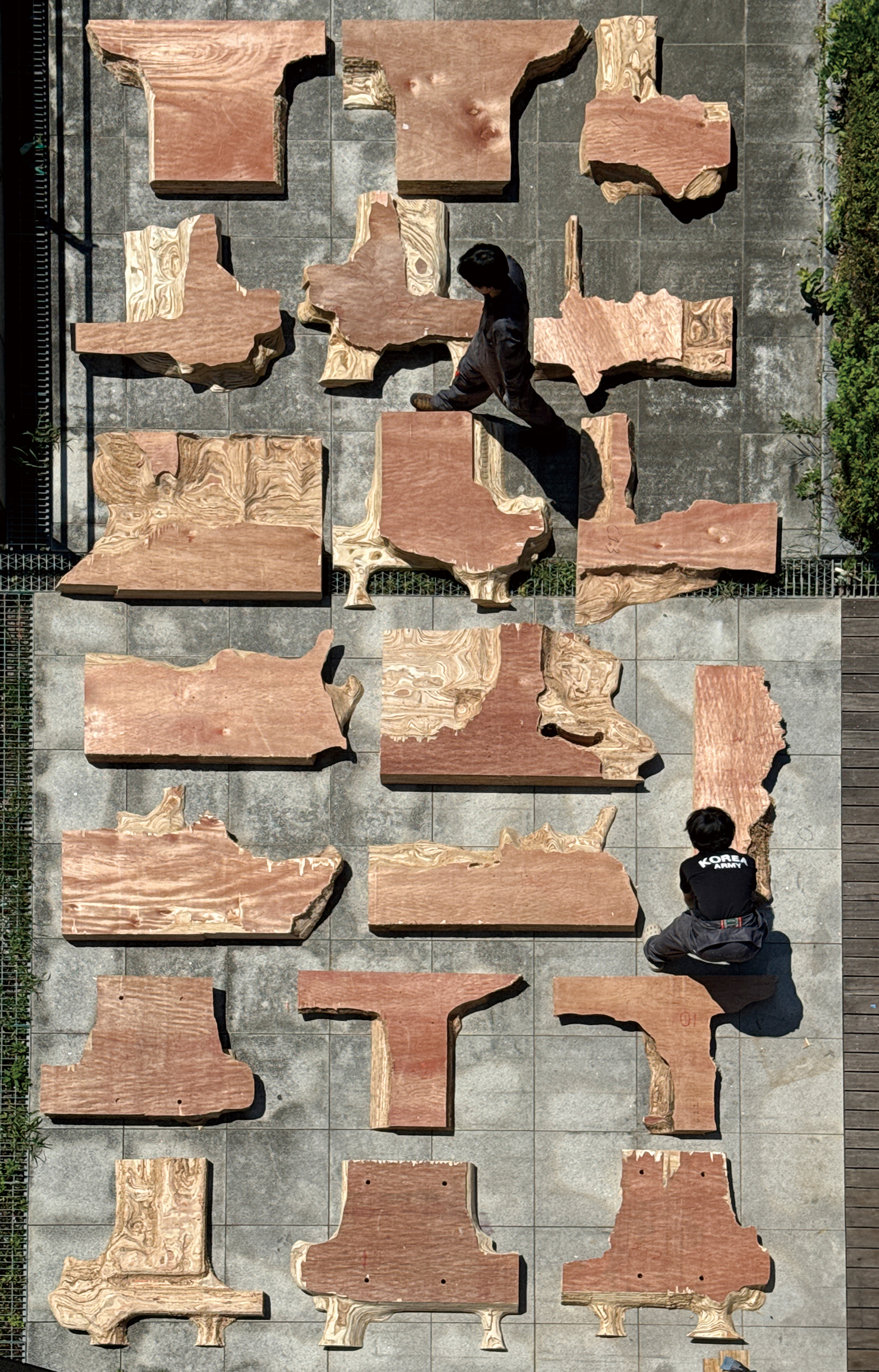
The generated form is then merged into a three-dimensional voxel model using Monolith and sliced longitudinally – perpendicular to the accumulated sections – to reveal new sectional profiles that directly express the flow of transformation. Finally, the structure was physically fabricated by milling seventy-two wooden pieces with a six-axis robotic arm and assembling them into a real structure. This physical realisation is not merely the process of digital fabrication; it is an experiment in embedding a digitally generated topological structure within the material logic of wood. Topology: Hanok does not seek to replicate the appearance or ornament of traditional architecture. Instead, it reconstructs its invisible elements (the flow of sectional continuity, the connectivity of curves, and the rhythm of structure) from a topologic perspective. Here, AI operates not as a passive tool, but as an active design agent that reconstructs and transforms tradition.