

SPACE November 2025 (No. 696)
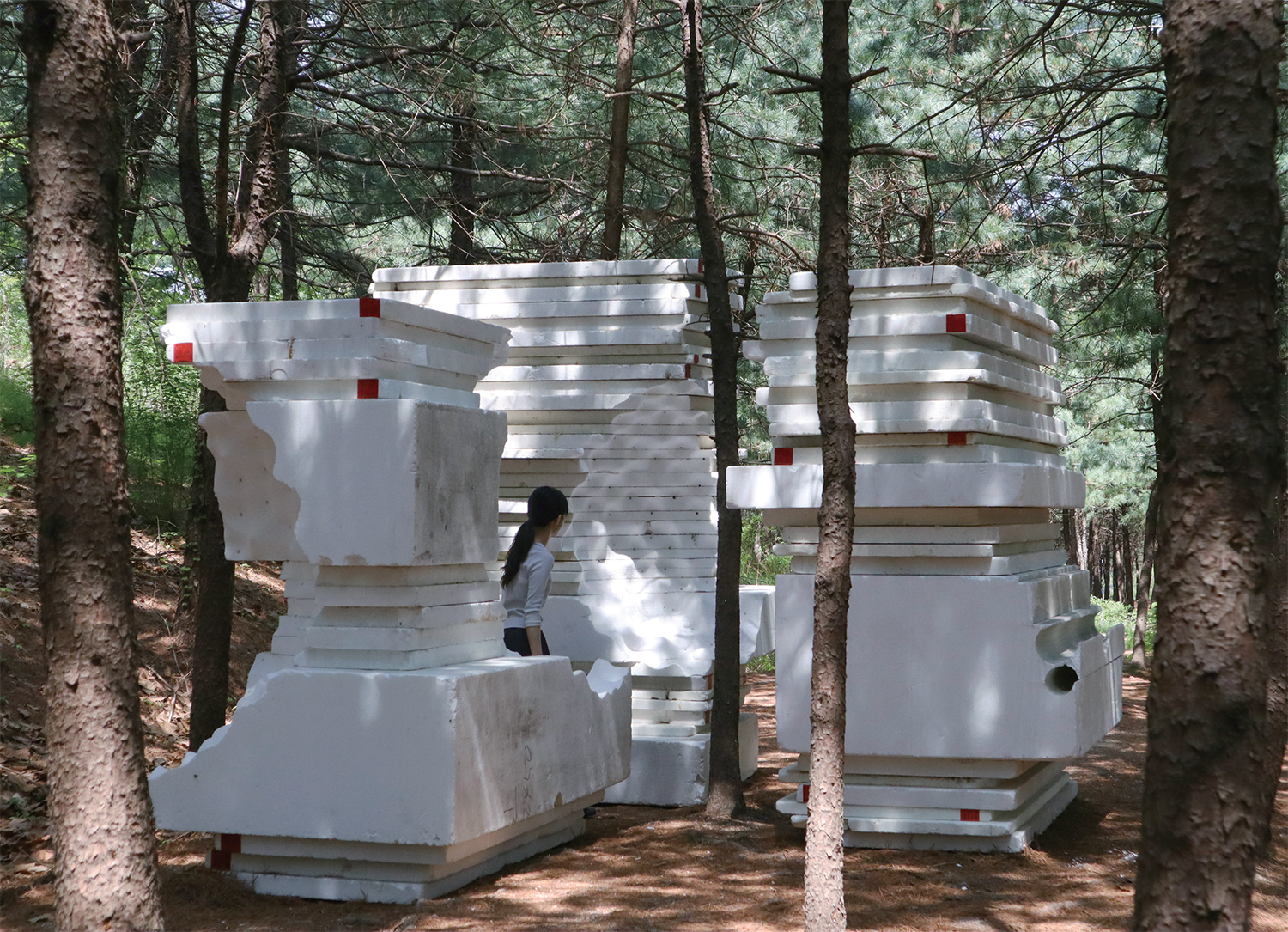
Decomposition Farm_Stairway (2022) was an experimental pavilion combining construction waste – particularly styrofoam, which takes 500 years to decompose – with industrial robotics and a mealworm ecology. Within the structure, thermally cut by a robotic arm, mealworms consumed styrofoam and produced harmless excreta that became a growth base for moss and plants, forming a system where the artificial and the natural coexisted in a cycle. However, the necessity of purchasing new styrofoam for fabrication, contrary to the original intentions, revealed a major limitation of the project. To address this issue, a subsequent experiment titled Strata of Decomposition (2025) was initiated.
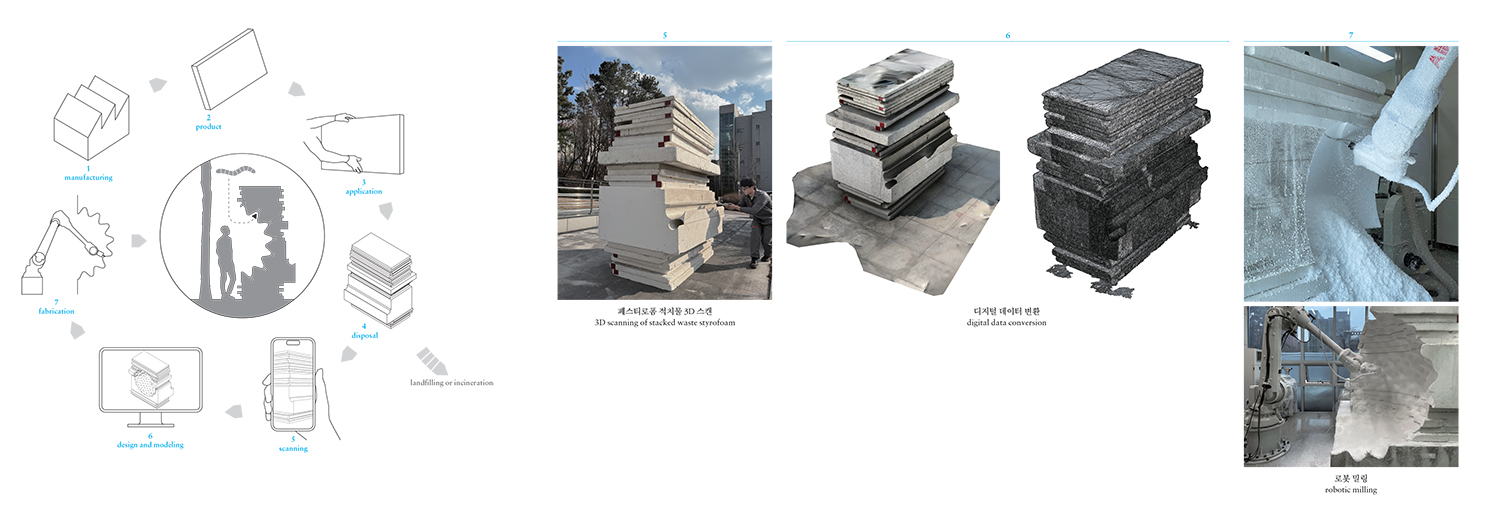
Workflow of Strata of Decomposition
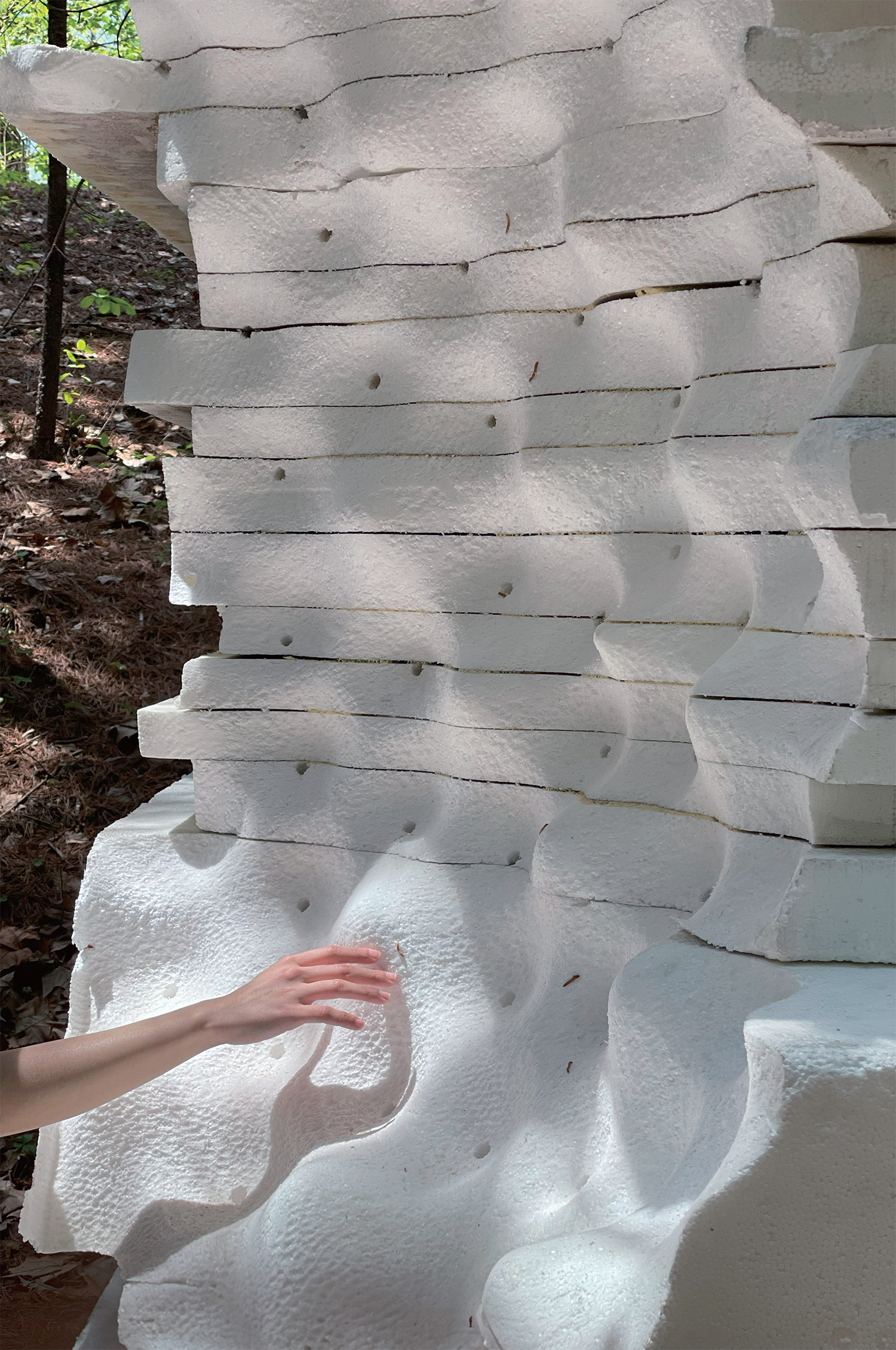
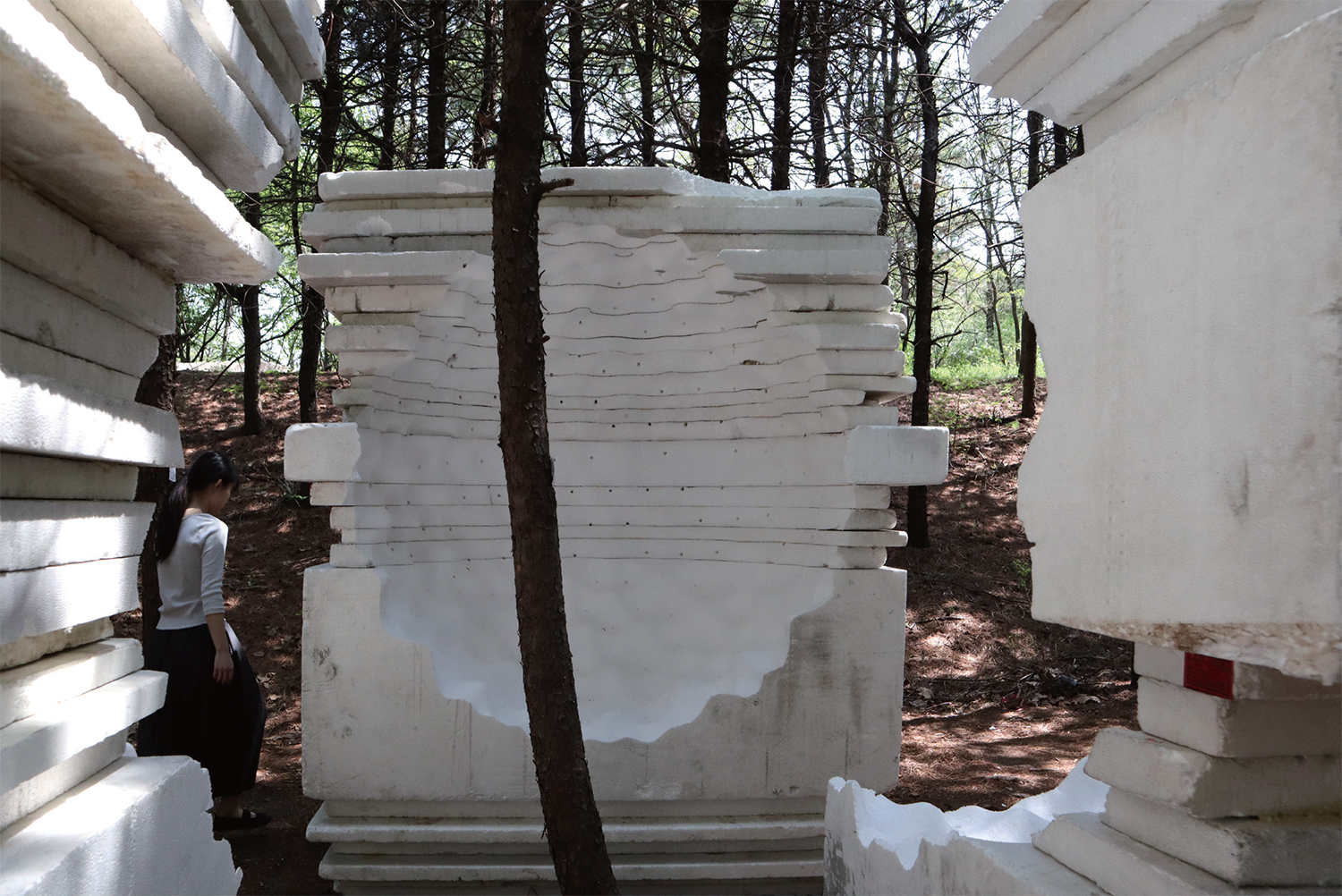
This work begins by 3D-scanning large piles of discarded styrofoam that have been left for long periods in urban waste disposal sites, converting them into digital data in their original form. In the 3D tool, parts of these forms were cut away and their surfaces reshaped with ridges and grooves, designed as pathways and shelters for mealworms to move, inhabit, and feed. The fully digitised form was precisely machined by industrial robotic arm and combined with forest planting patterns to create a hybrid structure providing the optimal habitat for mealworms.
When the mealworms and their food are placed together, the structure gradually decomposes. As the mealworms feed on the styrofoam, they grow, molt, and complete their life cycle as adult insects. This process visualises an instance in which material erosion and biological cycle occur simultaneously. Strata of Decomposition goes beyond simple insect cultivation or waste recycling—it transforms the entire life cycle of material, from origin to disappearance, into an architectural process. Within this structure, the opposing notions of ‘decomposition’ and ‘stratification’, ‘fabrication’ and ‘dismantling’, coexist, creating a new landscape in which the artificial and the natural infiltrate and merge with one another.