

SPACE November 2025 (No. 696)
Gyuam Village
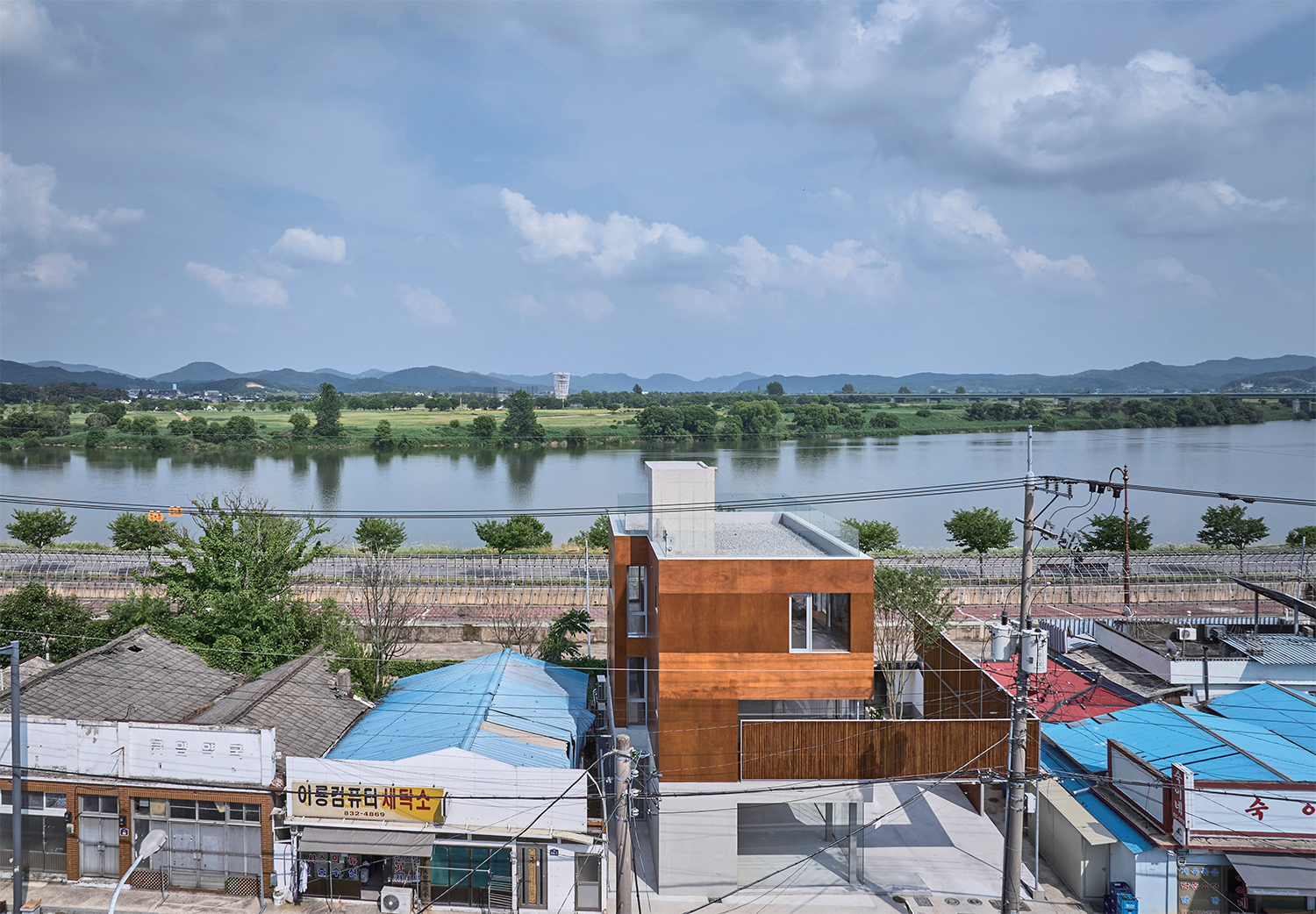
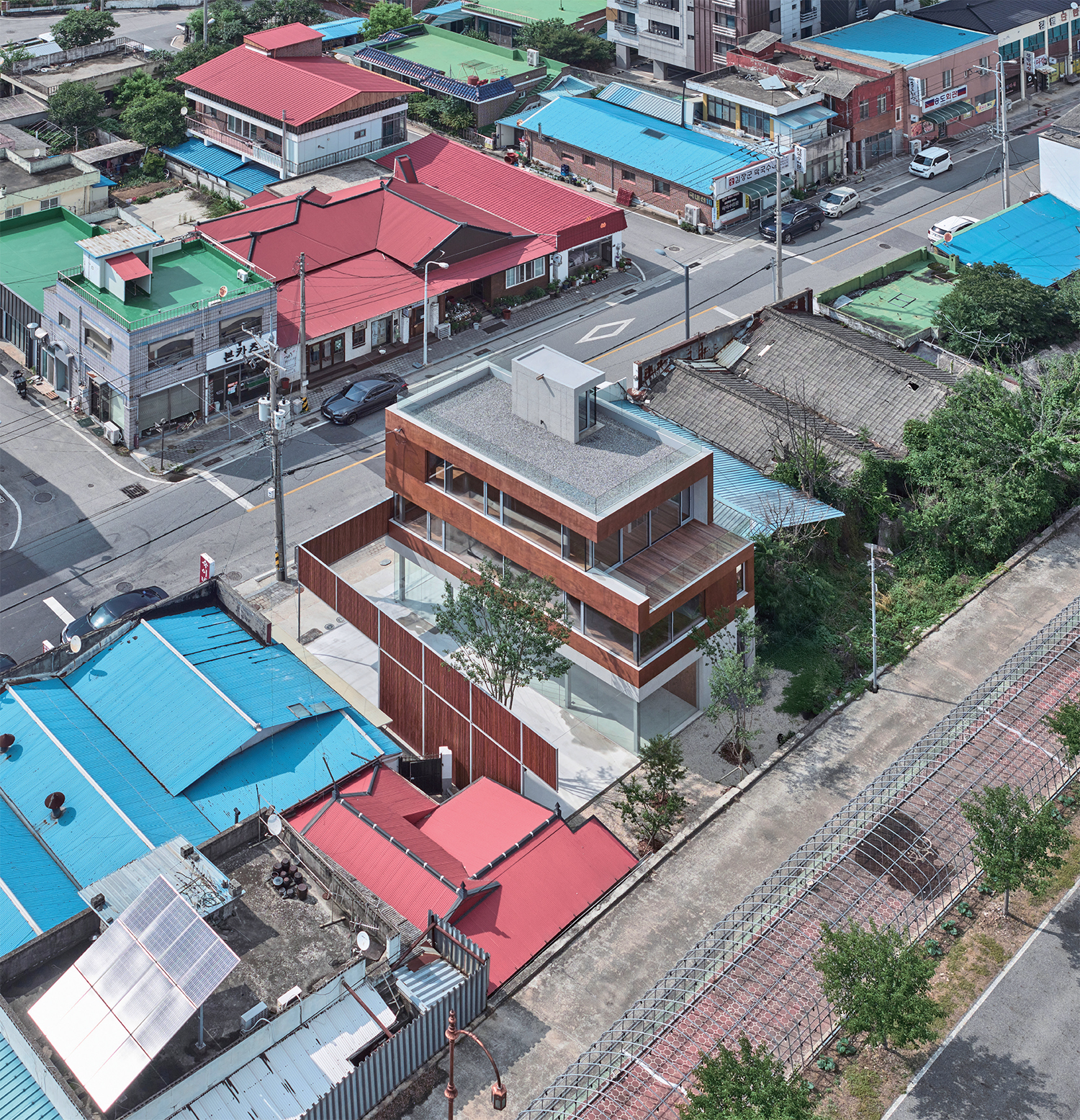
Gyuam Village is a riverside settlement situated along the Baekmagang River in Buyeo-gun, Chungcheongnam-do. In the past, this village thrived as a busy marketplace where boats would come and go through its ferry terminal. At one time, taverns, theatres, and inns lined its streets. However, the village began to decline in 1968 with the construction of the Baekjegyo Bridge. As overland transportation developed, commercial activity shifted across the river to Buyeo-eup, and many residents gradually left. Today, it is a quiet village. Around seven or eight years ago, both public and private agents began making efforts to revitalise the village. Their initiatives consistently focused on the theme of ‘craft’. However, after observing these efforts over several years, it appears that regeneration has not quite found its footing. It was in this context that I was commissioned to design a mixed-use building – part commercial space, part weekend residence – to contribute to the ongoing regeneration of the village.
A Gesture of Hospitality and a Path Yet to Find Its Direction
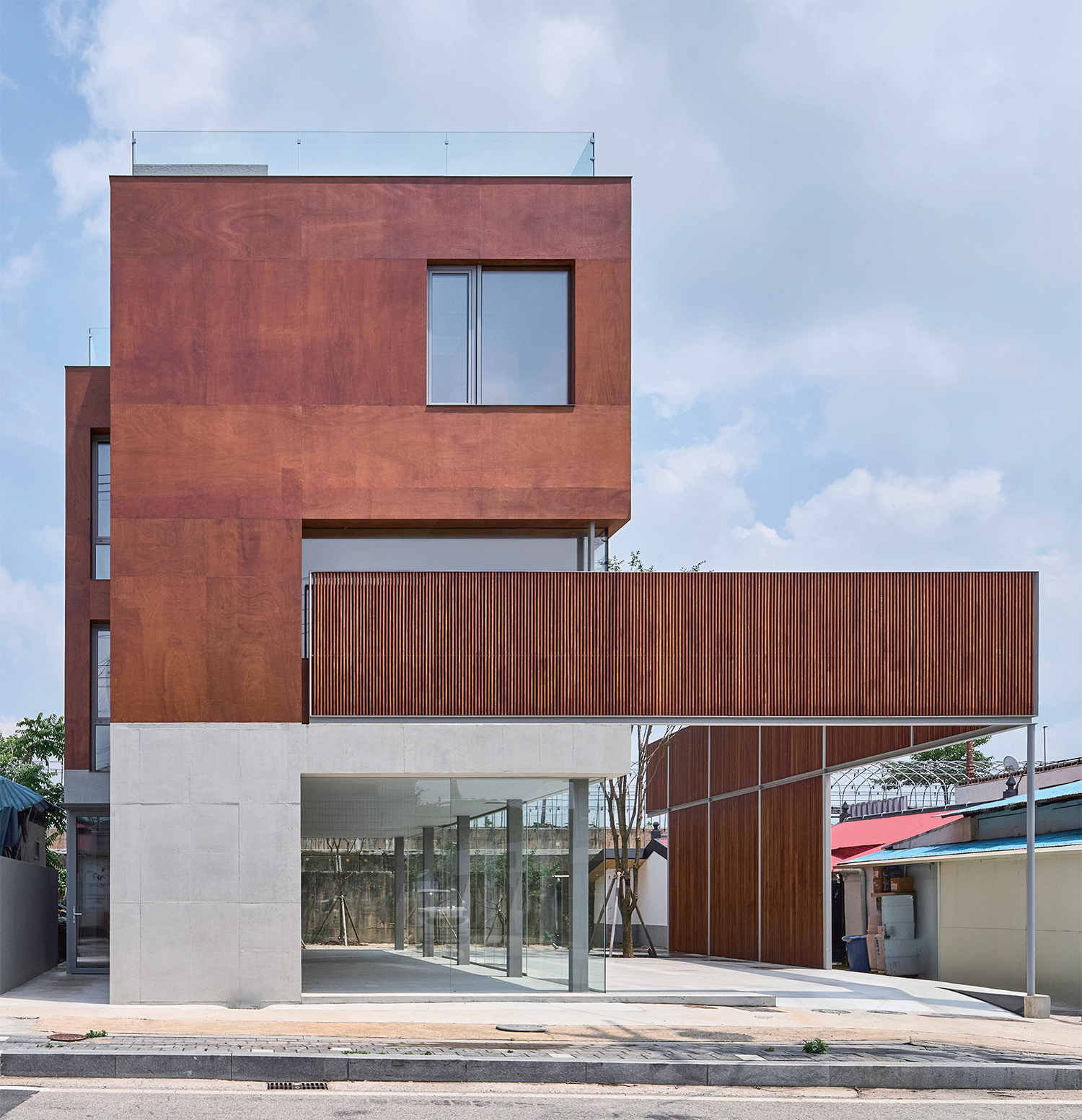
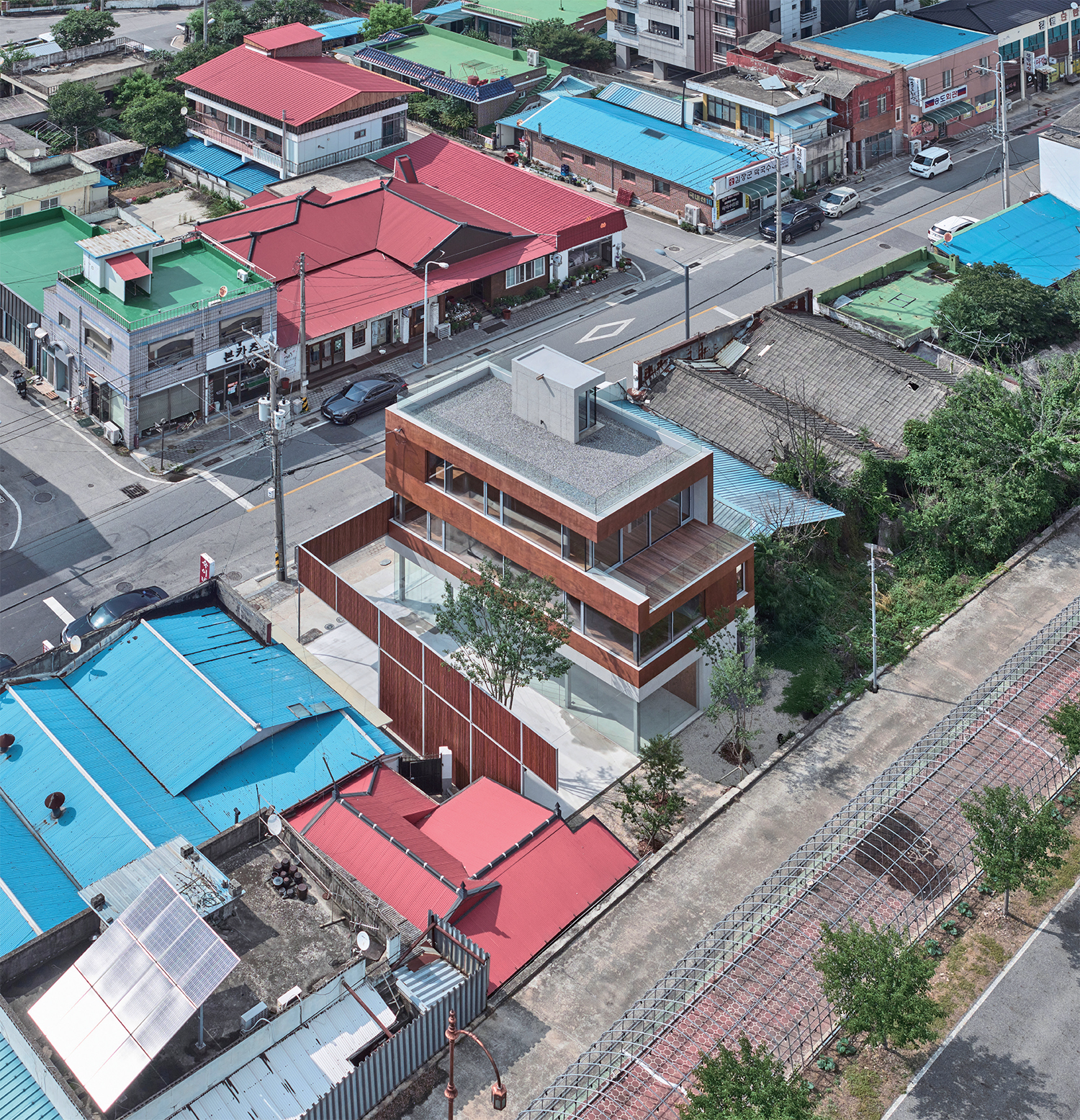
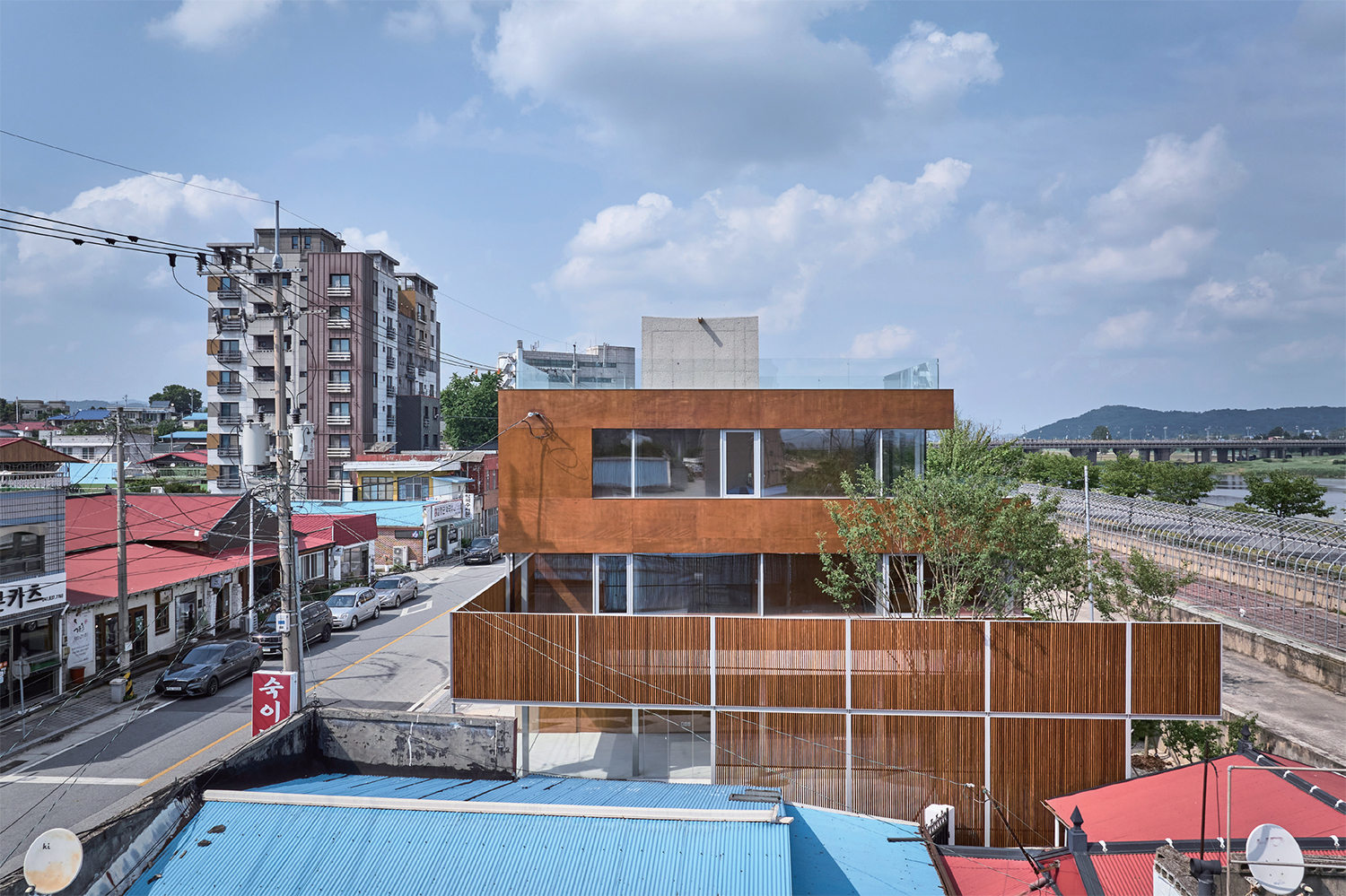
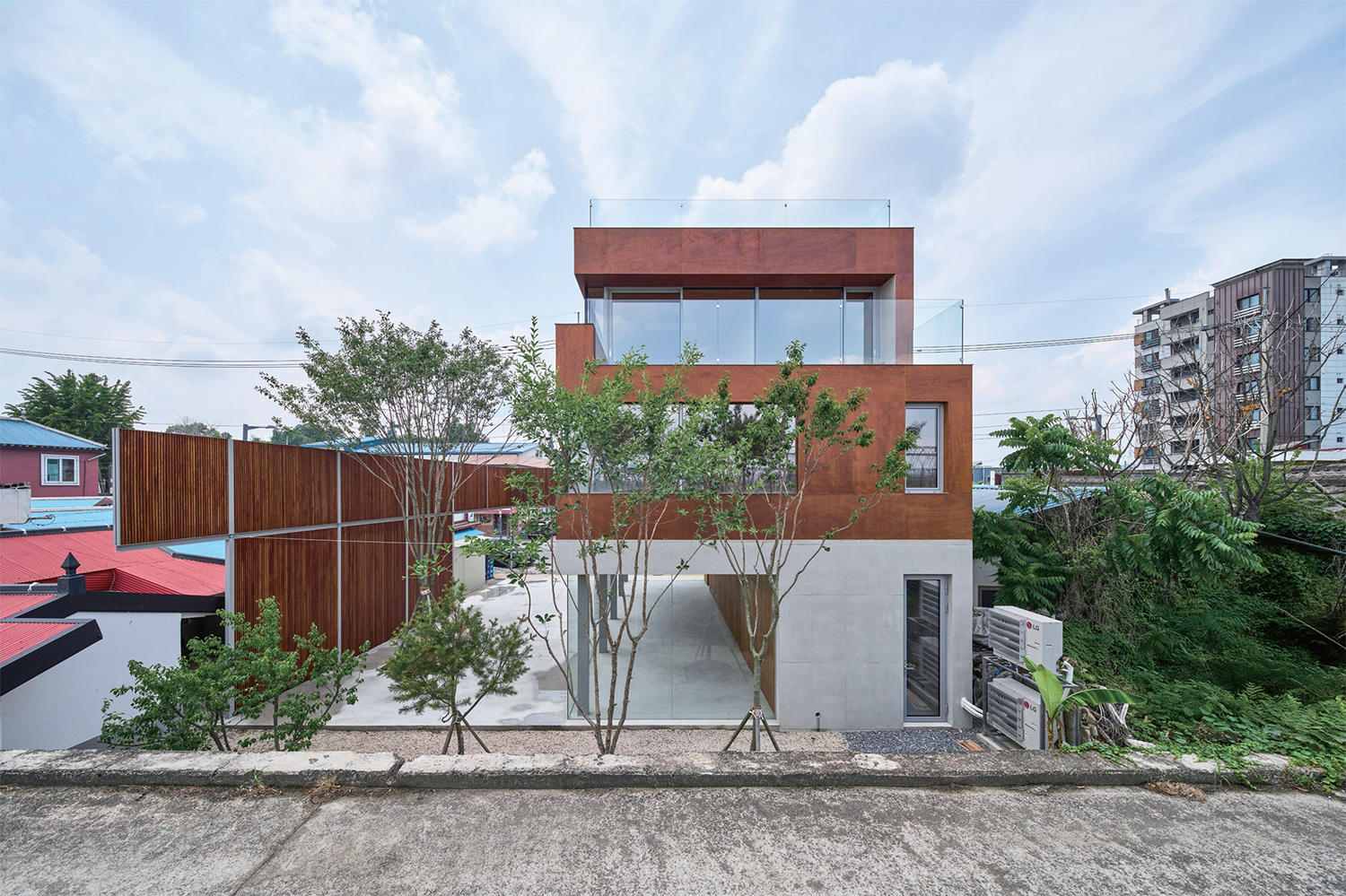
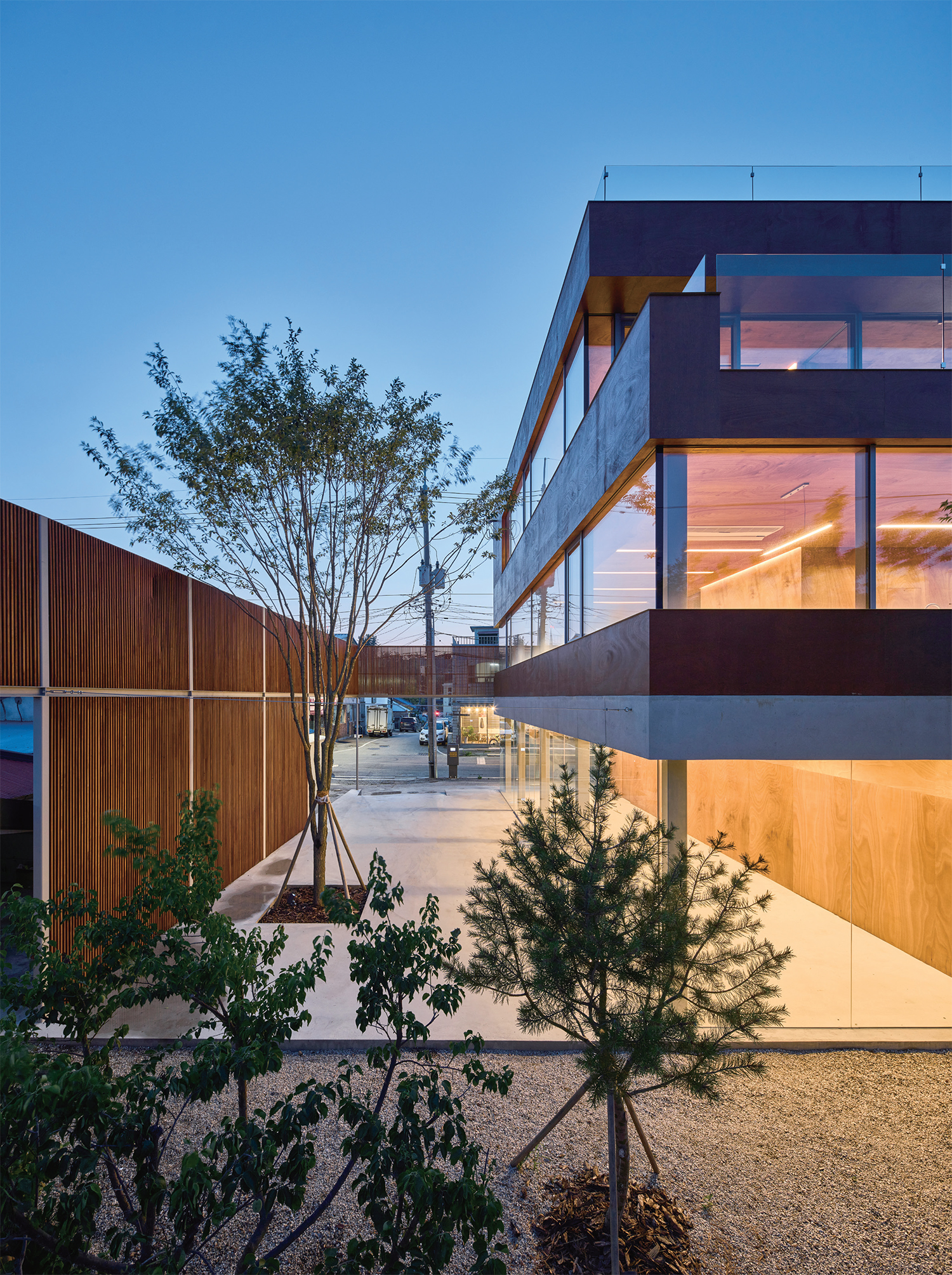
There are many ways in which architecture can participate in urban regeneration. Here, the focus fell upon the idea of paths. The site sits adjacent to a riverside embankment path (a pedestrian walkway along the Baekmagang River) and faces a road (Subuk-ro) that runs opposite a circulation route through the heart of the village. If these two paths could be connected across the site, more people might naturally ascend to the embankment path and enjoy the riverside scenery. It became the conceptual thread for the building’s layout. The structure was placed lengthwise along an east–west axis, opening itself to both the embankment path and the road. The southern portion of the site was intentionally left open, enclosed only by a louvered fence, so as to create a courtyard that faces both the path and the road. The building presents only a minimal façade to the street, allowing sunlight to flood into the remaining open space. The first floor, designed as a commercial unit, is a transparent space held within a “ㄷ”-shaped concrete section that extends into the courtyard. Together with the corner opening of the louvered fence, this creates a welcoming gesture toward the road. The original plan envisaged visitors entering through this open courtyard and ascending naturally to the riverside walkway. Unfortunately, the path connection could not be realised. Despite two rounds of review, the project failed to overcome the proverbial ‘wall of authority’. We intend to revisit this attempt once the client has fully settled, both physically and emotionally.
A Quiet Frame
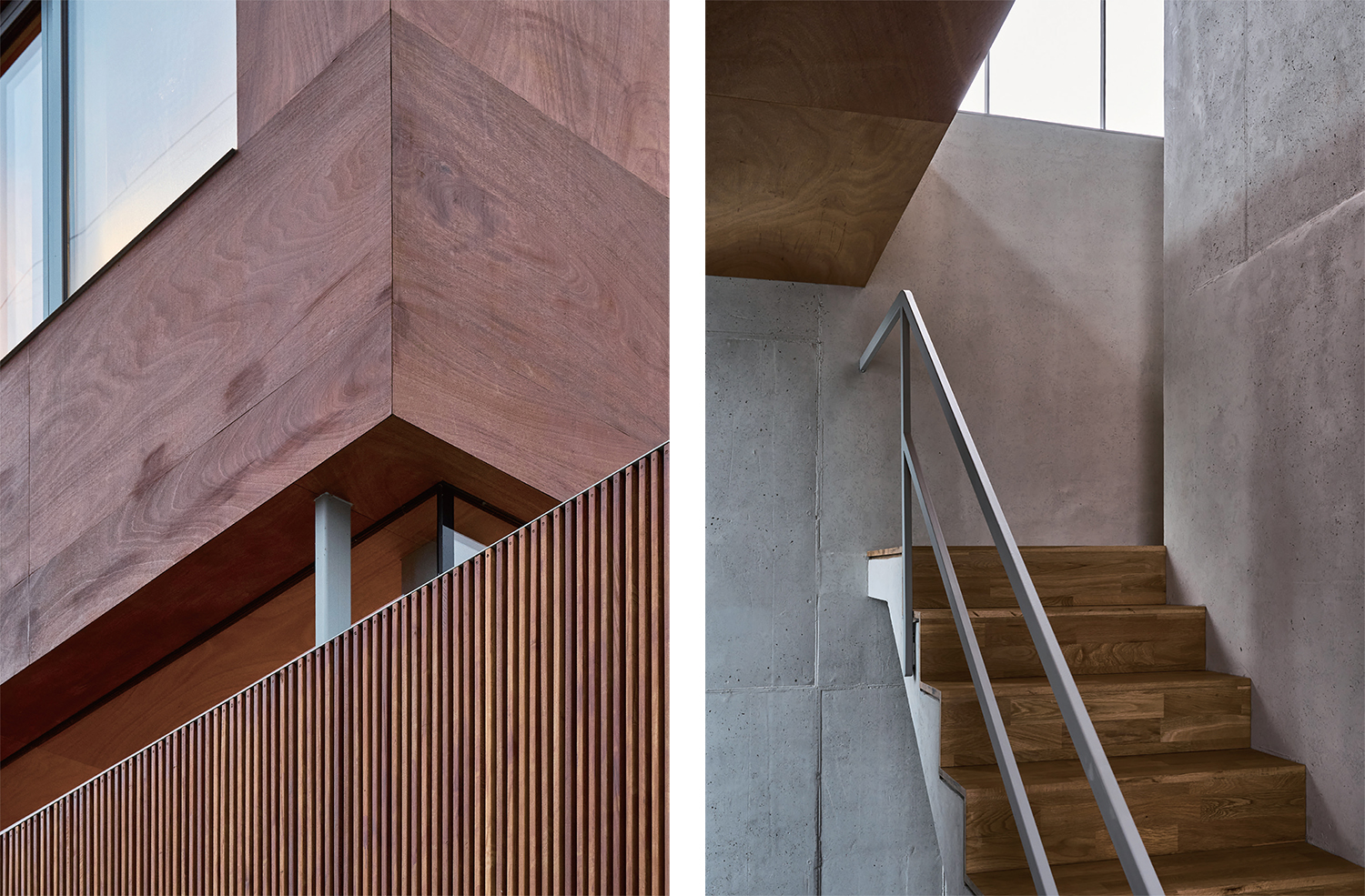
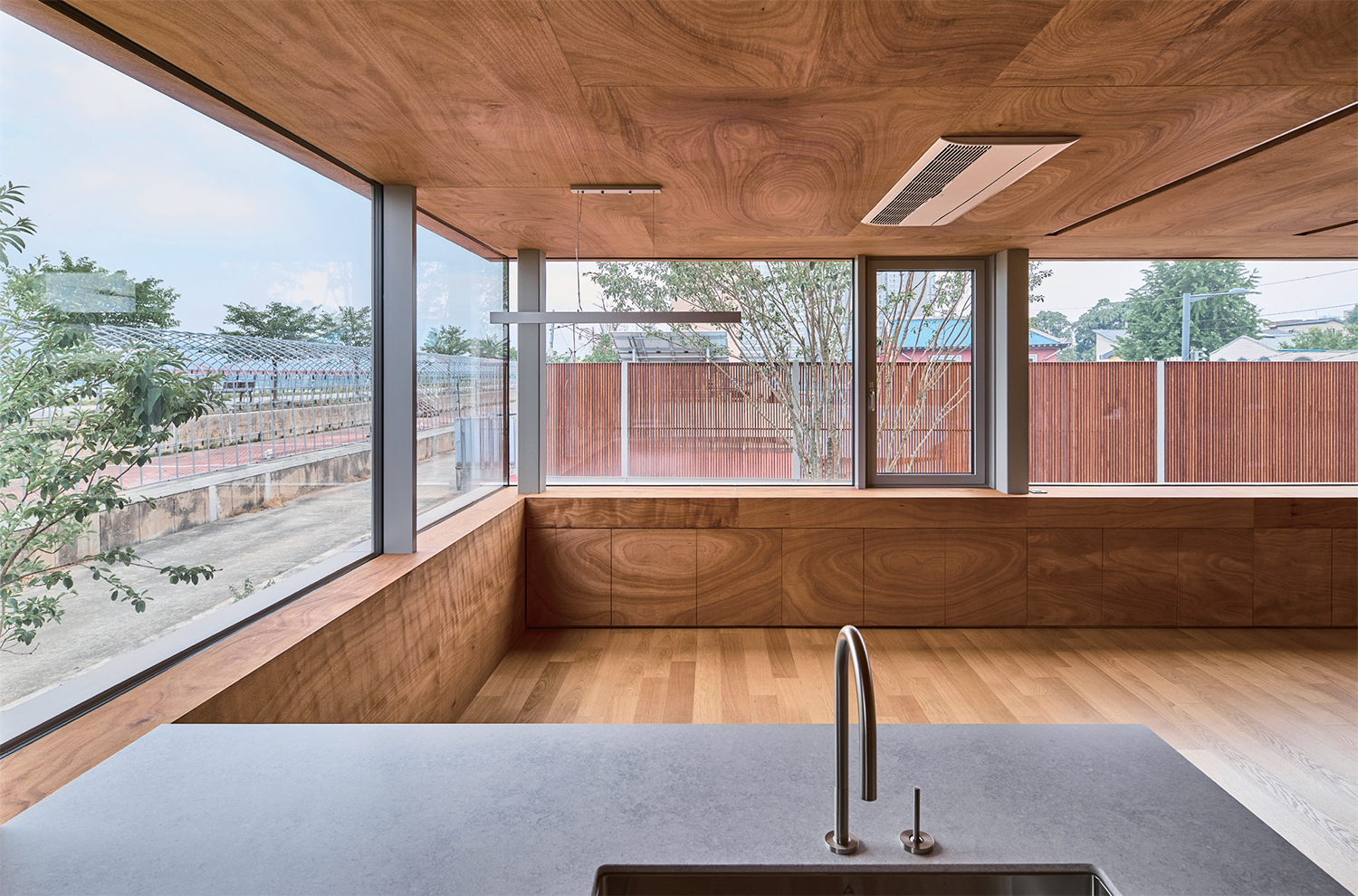
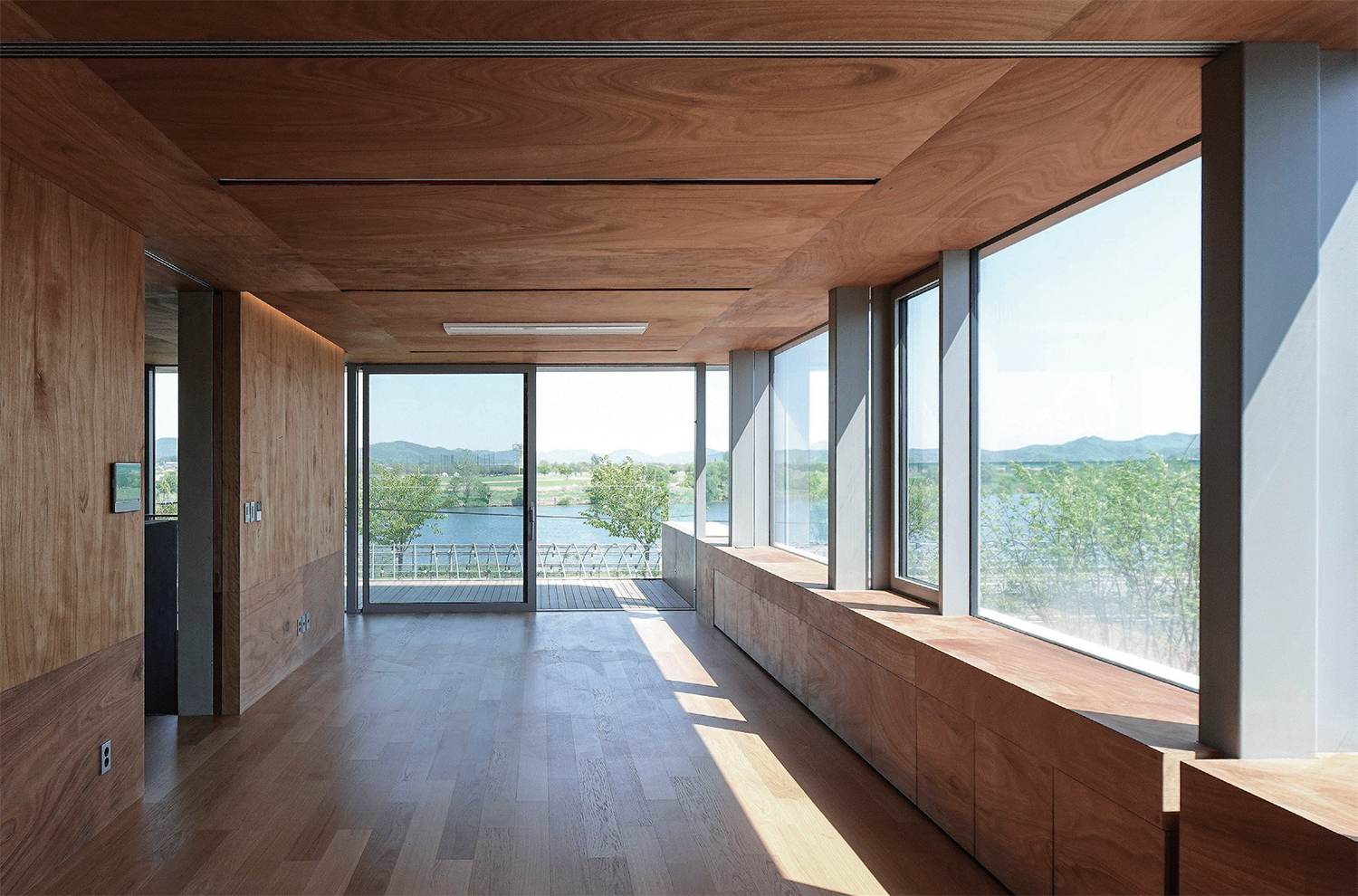
The second and third floors house the weekend residence. This space was conceived as a single, quiet frame. In real terms, this meant leaving only the minimal structural elements – walls, columns, and glass – while concealing all subsidiary features. Internal partitions and doors were eliminated, and window frames were hidden. Windowsills were integrated into built-in furniture, and furniture in turn was designed to function as walls. All of this was intended to create a contemplative space akin to a traditional pavilion, open and uninterrupted. Hiding the window frames and transforming the sills into furniture was not merely an aesthetic decision. It was also to give the interior a sense of depth through a refined framing of space. When the gaze is directed through a deep and well-defined frame, the landscape is perceived more profoundly, and the act of contemplation becomes more intense.
A Natural Gaze
The design sought to ensure that outward views would flow without obstruction. Achieving this required careful calibration of sill and fence heights. The second-floor windowsills were set at 87cm, and the louvered fence was fixed at 1.8m relative to the second-floor level. Thus, a view from the second floor towards the courtyard naturally extends beyond the fence to the village scenery and then to the sky. The third-floor windowsills were set at 73cm, a height suitable for both seated and standing positions, effectively doubling as a desk. These sills extend outward to form a terrace facing the Baekmagang River, with the terrace floor aligned to the interior floor level. This simple “ㄴ”-shaped section is complemented by transparent glass railings. From both seated and standing positions, one can gaze upon the river through a deep, unobstructed frame.
©Jeon Sanghyun
Landscape
The village landscape is meant to be experienced in a mediated way. The angled louvered fence allows glimpses of the scenery beyond, softening the view. A Chinese fringetree in the courtyard screens a distant apartment block that would otherwise intrude disharmoniously into the view. The architecture itself seeks to become part of the landscape. Seen from the village road, the louvered fence lightly filters the embankment path beyond, while the planted trees loosely connect with the riverside greenery. Concrete and timber, chosen for their ability to absorb light and weather gracefully over time, form the external and internal finishes. These materials enable the building to hold a rich variety of sensory impressions within its simplicity. In this way, the house settles into the village as part of a shared landscape.
You can see more information on the SPACE No. November (2025).
Architect
Spacematter Architects (Jeon Sanghyun)
Design team
Suh Younghwa, Yun Sehui
Location
44, Subuk-ro, Gyuam-myeon, Buyeo-gun, Chungcheongn
Programme
neighbourhood living facility (1F), single house (
Site area
208㎡
Building area
83.04㎡
Gross floor area
229.31㎡
Building scope
3F
Parking
1
Height
10.95m
Building to land ratio
39.92%
Floor area ratio
110.24%
Structure
RC, steel frame
Exterior finishing
okoume plywood, exposed concrete
Interior finishing
okoume plywood, exposed concrete
Structural engineer
delta group
Mechanical engineer
SE WON Co., Ltd.
Electrical engineer
JUNG YEON Co., Ltd.
Construction
Re_one Architects
Design period
June 2022 – Mar. 2024
Construction period
June 2024 – June 2025
Client
Lee Taekhee, Jung Yeonhee
Jeon Sanghyun
Jeon Sanghyun graduated from the department of architecture at Kookmin University in 2002 and earned his master’s degree in urban management from the Technical University of Berlin in 2012. After 15 years of professional experience in an architectural firm, an interior design studio, and a construction company, he founded Spacematter Architects in 2020. He is principal of Spacematter Architects and an adjunct professor of architecture at Kookmin University. His project Soongin Space (2019) received the Excellence Award in the Emerging Architect category at the 2021 Korea Architecture Awards. In 2025, his Hangahan Building (2025) was awarded in the Non-Residential category of the national competition Finding Good Houses in Our Neighborhood. He is the author of Humanistic Doubts on the City (2015), Seoul: The Dignity of the City (2015), and Shubble Shuh-ool Seoul (2023).
0