
SPACE April 2026 (No. 701)
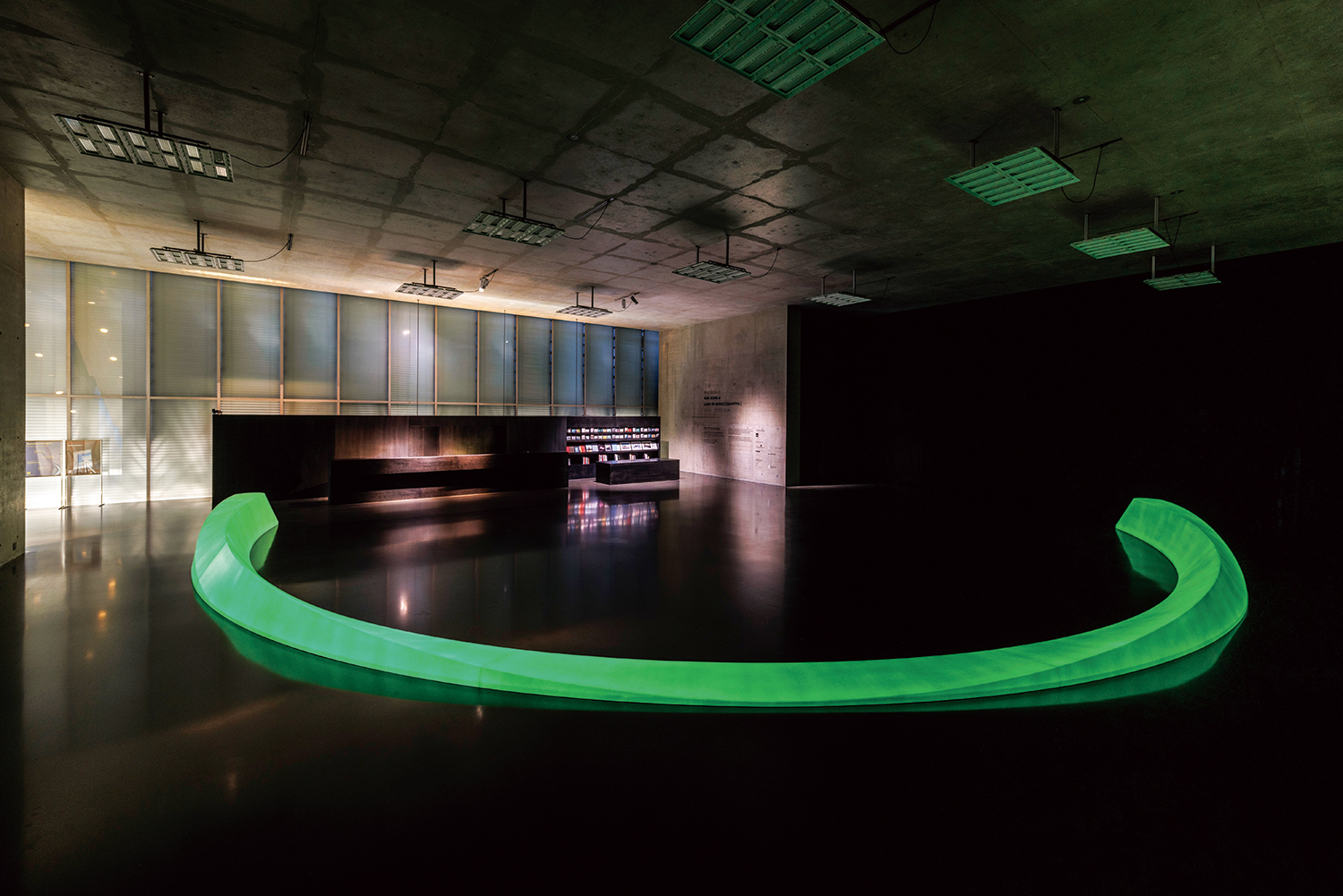
First floor of Kunsthaus Bregenz featuring GRAVITTA (2025) ©KOO JEONG A, Kunsthaus Bregenz / Image courtesy of the artist / Photo by Markus Tretter
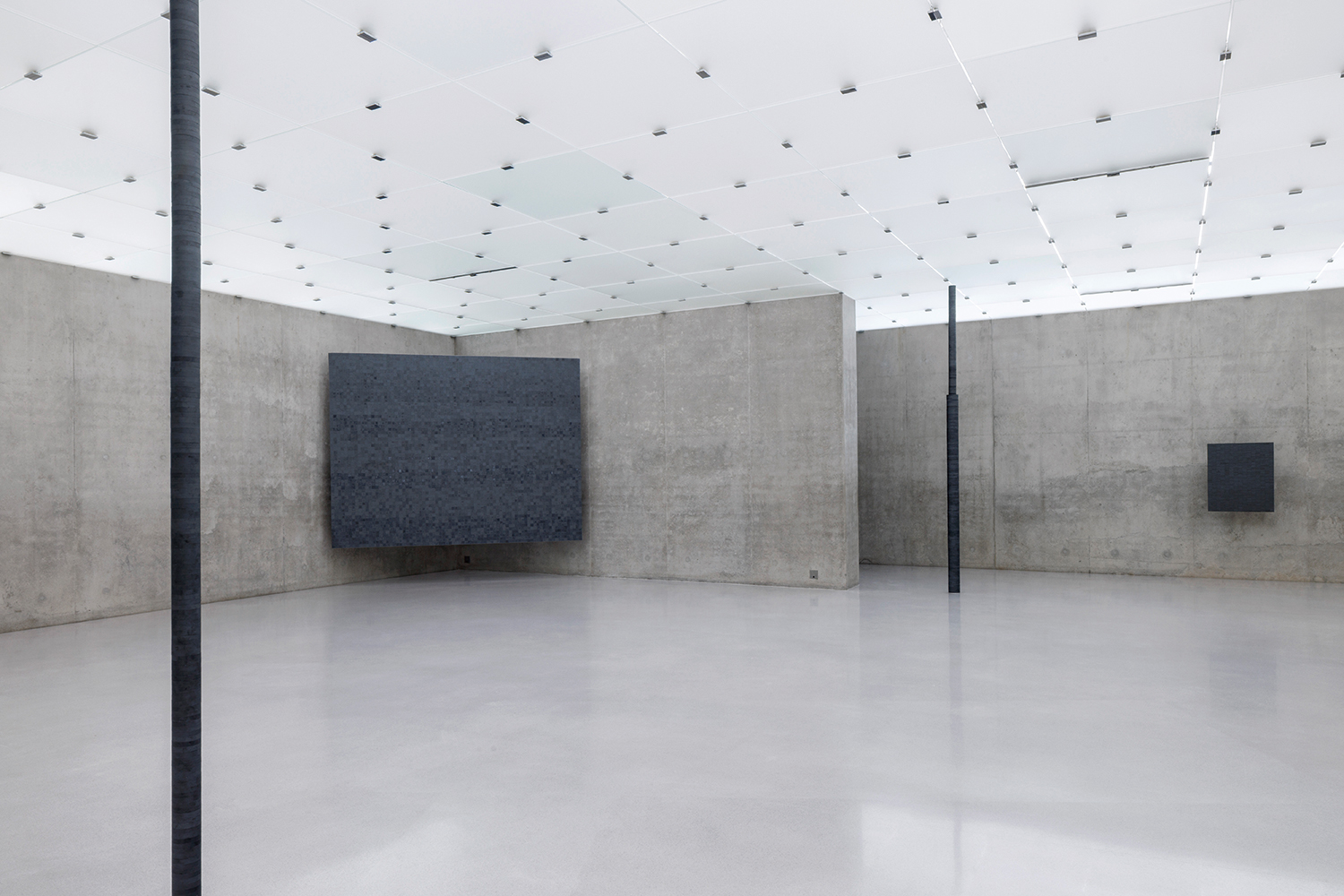
Exhibition view, second floor of Kunsthaus Bregenz ©KOO JEONG A, Kunsthaus Bregenz / Image courtesy of the artist / Photo by Markus Tretter
Through an expansive practice spanning large-scale sculpture, painting, video, animation, sound, and scent, Koo Jeong A invites audiences to perceive invisible forces and natural phenomena. For Koo, art serves as a point of convergence for numerous energies—an intersection where one undergoes a transformation. The moment a visitor enters the exhibition space, they cease to be a static observer; instead, they become another vital energy within the art’s constitution. This interaction suspends both the work and the viewer in a state of perpetual, dynamic energy. It is in this precise moment that ‘OUSSS’ occurs, or, perhaps, the space itself becomes OUSSS.
OUSSS is a concept of Koo’s own invention. It is often described as a deeply personal space or state where meanings (relating to the mysterious nature of the universe, form, and energy) are in constant flux. Strictly speaking, however, OUSSS resists logical definition. It is a fluid entity that transcends boundaries, made manifest as a word, a morpheme, a material, or a psychological state.
Opening Jan. 31, the Kunsthaus Bregenz (1997) in Austria transforms into a world where OUSSS unfolds. Designed by Peter Zumthor, the museum features three intersecting exposed concrete walls that bear its structural load, encased in an etched glass facade that diffuses incoming light. It is a masterpiece of minimalist architecture where neither art nor building overwhelms the other. Within this space, Koo Jeong A achieves a commanding presence by precisely placing a select number of works, effectively co-opting the building itself as part of the installation.
On the first floor, the site-specific sculpture GRAVITTA (2025) traces a massive, phosphorescent arc. The piece is an excerpt from a virtual skate park series.▼1 While the fluidity of its curves and the principles of its construction evoke the concept of kinesis, the sculpture remains non-functional. Movement does not actually occur; it is merely imagined.
The second floor is permeated by the scent of Swiss pine (Pinus cembra) native to the Alps, housing three wooden sculptures in the shape of Möbius strips. The pine scent stimulates the viewer’s memories and emotions while its physical source remains hidden. These Möbius forms symbolise cyclicity, the mutual penetration of interior and exterior, and the tangled relationship between creation and extinction.
The third floor gathers works exploring magnetic fields—one of the world’s invisible forces. These pieces evolved from Koo’s research into Magnet (1997), an unrealised project by architect Cedric Price. Through Magnet, Price sought to implement ‘anticipatory architecture’. Rather than forcing movement through fixed structures, he intended for temporary, mobile frameworks to prompt people to move in new ways, responding to the needs and desires they had not yet recognised. While Price used the magnet as a metaphor for his architectural philosophy, Koo employs it as a literal material. Composed of ferrite magnets, these works appear to float near the walls, providing a sensory encounter with a force we cannot see.
Finally, the fourth floor features a video projection. A crouched figure is seen from behind, sitting in a meadow facing the sun, positioned before a glowing, fluorescent shape. There is almost no movement. However, as the camera slowly zooms in and out, time appears to flow backward. Through this simple repetition, the artist suggests that time does not always move linearly. Depending on one’s perspective, events that have already occurred can be re-signified by what follows, allowing us to intuit the non-linearity of time through our senses.
The exhibition will be open until May 25.
_
1 A series of public art projects involving the creation of skate parks coated with phosphorescent paint that absorbs sunlight by day and glows by night. Beginning in France (2012), the project has been realised in various forms tailored to specific locales, including the U.K. (2015), Brazil (2016), and Italy (2019).